

Oplysninger: Dette indlæg kan modtage kompensation fra partnere, der er opført gennem tilknyttede partnerskaber, uden omkostninger for dig. Dette påvirker ikke vores vurderinger, og meningerne er vores egne. Få mere at vide her.
Hvis du ønsker en dybdegående og detaljeret gennemgang af Seeking Alpha, er du kommet til det rigtige sted.
Først finder du ud af, hvad Seeking Alpha er, hvordan Seeking Alpha kan gavne dig og dine investeringer, og derefter springer vi i flere detaljer, såsom:
Du kan enten blive et grundlæggende Seeking Alpha-medlem gratis, abonnere på Seeking Alphas Premium Plan (som er det, jeg bruger), eller du kan bruge Pro Plan.
Er du klar til at se, om Seeking Alpha er den bedste investeringsanalyseplatform for dig?
Lad os dykke direkte ind.
Samlet bedømmelse:
Bedømt 4,8 ud af 5
Tilpassede værktøjer
Indhold af høj kvalitet
Dybdegående aktieanalyse
Kan være vanedannende
Kompleks grænseflade
Kunne være overvældende
Seeking Alpha er en investeringsanalyseplatform designet til mellemliggende til avancerede investorer, der ønsker omkostningseffektiv, upartisk og kvantitativ information.
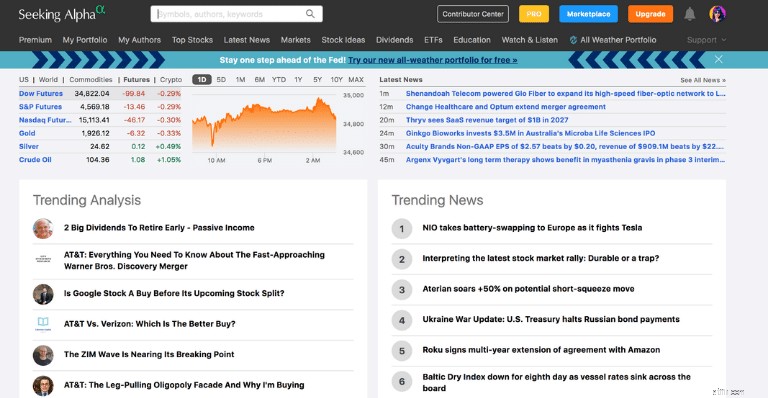
Nogle værktøjer, du kan begynde at bruge, hvis du tilmelder dig Seeking Alpha , inkluderer:
Siden Seeking Alphas start i 2004 har platformen tiltrukket over 20 millioner månedlige brugere.
Her er noget smart, som du måske ikke vidste om navnet Seeking Alpha:
Udtrykket "alfa" er ikke kun det første bogstav i det græske alfabet, men det blev også brugt af grækerne til at repræsentere tallet 1.
Udtrykket "alfa" er faktisk også et finansbegreb og udtrykkes som følgende symbol:
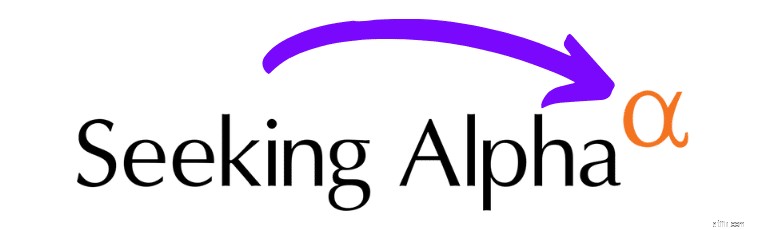
Her er, hvad udtrykket "alfa" betyder i økonomiske termer:
Alfaen i en portefølje udtrykkes typisk som enten et positivt tal, et negativt tal eller et 0.
Her er, hvad disse tal ville betyde:
2 %
Porteføljen klarede sig 2 % bedre end markedet
0 %
Portefølje udført på linje med markedet
-2 %
Porteføljen underperformerede markedet med 2 %
Så i virkeligheden har Seeking Alpha-platformen et meget smart ordspil med sin titel.
Seeking Alpha repræsenterer vores ønske om at opbygge en portefølje, der kan overgå markedet.
Det ultimative mål med Seeking Alpha er at hjælpe fundamentale investorer med at dele information og ideer med ligesindede investorer på platformen.
Når du tilmelder dig og bliver et Seeking Alpha-medlem, får du eksklusiv adgang til artikler og nyhedsbreve skrevet af erfarne og anerkendte fundamentale investorer.

Den højeste investeringsrelaterede legitimation, som nogen kan tjene (bortset fra måske en ph.d.) er CFA-certificeringen.
Selvom ikke alle forfattere måske har en CFA-betegnelse - hvilket er helt fint - er de, der bærer CFA-bogstaverne, også gode kandidater at lære af.
Selvom du er på Seeking Alphas gratis plan, kan du stadig have adgang til:
Tag et kig på blot et udsnit af de mange artikler, der udgives dagligt:
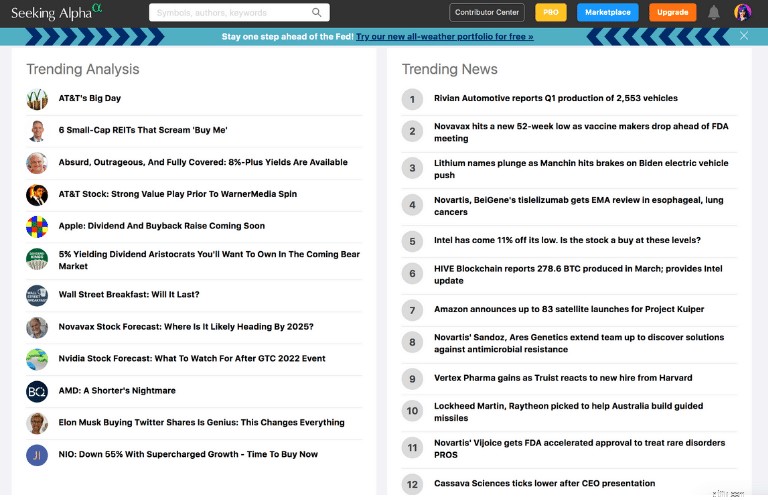
Faktisk kan Seeking Alpha prale af mere end 7.000 aktive, erfarne forfattere, som udgiver mere end 10.000 dybdegående anmeldelser hver måned.
Disse forfattere dykker dybt ned i aktier , gennemgang af hver virksomheds økonomi og giver deres egen mening om, hvorvidt aktien skal være en:
Ud over at lære af dine professionelle investeringskammerater om hver aktie, giver Seeking Alpha dig nu også chancen for at lave din egen research.
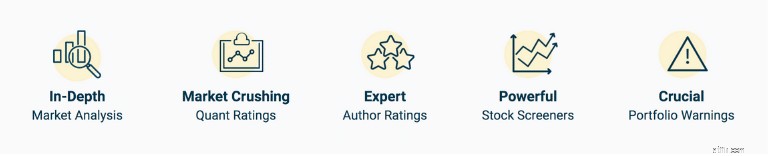
Nogle smarte forskningsværktøjer, der er tilgængelige for alle Premium- og Pro-medlemmer, omfatter:
Vi vil gå mere i detaljer om disse værktøjer senere i artiklen (så fortsæt med at læse!).
Hovedideen her er, at Seeking Alpha giver dig det bedste fra begge verdener:Du kan lære af og interagere med dine jævnaldrende samt få praktisk erfaring, når det kommer til investeringsanalyse.
Lad os tage et større billede af fordele og ulemper ved Seeking Alpha (for de betalte muligheder):
Minimal til ingen reklamer
Dyrt, hvis du er en afslappet investor
Adgang til eksklusive daglige nyhedsbreve, interviews og artikler
Mindre dækning på krypto sammenlignet med andre sektorer
Indsigtsfuld kvantitativ analyse af aktier
Er fokuseret på investeringsanalyse og automatiserer ikke dine egne investeringer
Tilpas lageradvarsler (du modtager push-meddelelser)
Brugervenlighed/grænseflade kan være forvirrende
Crowdsourcede artikler giver dig chancen for at interagere direkte med forfatterne
De fleste artikler og aktier er hovedsageligt fokuseret på USA (og nogle gange Canada)
Du kan tilpasse mange af Seeking Alpha-værktøjerne
Kunne være komplekst, hvis du er en passiv investor (ingen dagshandel)
Inden du læser videre, tjek mine vurderinger for hver af følgende 6 kategorier:
Investeringsindsigt
⭐️⭐️⭐️⭐️⭐️
Investeringsværktøjer
⭐️⭐️⭐️⭐️⭐️
Kundeservice
⭐️⭐️⭐️⭐️⭐️
Brugervenlighed
⭐️⭐️⭐️⭐️⭐️
Omkostninger
⭐️⭐️⭐️⭐️
For at give lidt flere detaljer om årsagen til mine vurderinger, tag et kig på min opdeling nedenfor:
Indtil videre er jeg ret imponeret over Seeking Alpha.
Seeking Alpha blev grundlagt i 2004 af David Jackson.
David arbejdede som aktie- og teknologianalytiker hos Morgan Stanley under teknologiboblen, hvor han undersøgte aktier og skrev sine resultater.
Det var i denne periode, at David indså, at der var en iboende interessekonflikt, hvis store investeringsbanker offentliggjorde deres undersøgelser af visse investeringsprodukter, især hvis de store banker solgte disse investeringsprodukter.
Hvorfor skulle en stor investeringsbank offentliggøre et forskningspapir om et underordnet produkt, som banken selv sælger?
Sådan blev Seeking Alpha født.
Her er nogle flere detaljer, du bør vide om Seeking Alpha:
Grundlagt år
2004
Hovedkvarterets placering
Ra'anana, Israel
Månedlige brugere
20 millioner+
Månedlige seere
40 millioner+
Månedlige aktive forfattere
7.000+
Månedlige udgivne artikler
10.000+
Månedlige omkostninger
– Begrænset adgang =$0
– Premium =19,99 USD
– Pro =$199,99
Hvem skal bruge Seeking Alpha
– Mellemliggende investorer
– Avancerede investorer
– Daghandlere
Indholdstype
– Podcasts
– Videoindhold
– Skriftligt indhold
Fremragende funktioner
– Regnskab
– Udskrifter af indtjeningsopkald
– Tilpassede lagermeddelelser
– Dybdegående analyse fra eksperter
– Gennemsigtigt aktievurderingssystem
– Diagrammer til sammenligning af aktiepræstationer
Tilgængelighed
– iPad
– Desktop
– Android
– iPod touch
– iPhone (iOS 12.2 eller nyere)
Kundeservice
– Telefon
– Forum
Kundeservice åbningstider
Mandag til fredag 8.00 til 16.00 EST
Landetilgængelighed
International
Selvom Seeking Alpha er tilgængelig for et internationalt publikum, skal jeg bemærke, at platformens primære investeringsforskningsfokus er på USA og Canada.
Jeg er en stor fan af Seeking Alpha-webstedets grænseflade.
Personligt synes jeg Seeking Alpha er meget brugervenligt, inuitivt, og det gør også et godt stykke arbejde med at vise informationen på en organiseret måde.
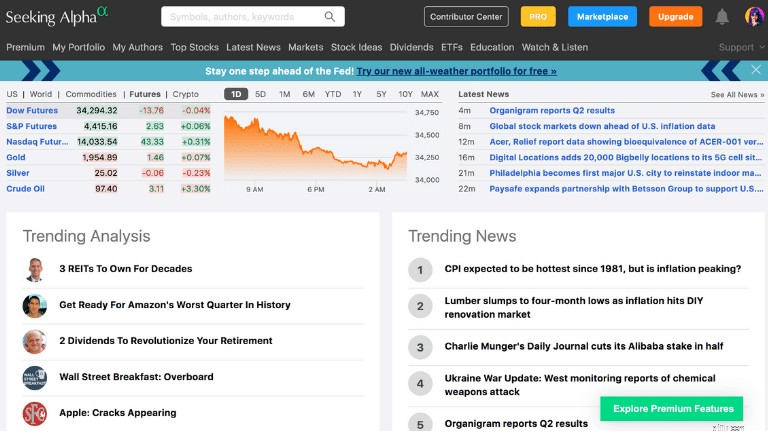
Nu er den eneste konstruktive feedback, jeg vil have, at for begyndere investorer – og selv for mellembrugere – kan informationen om Seeking Alpha ikke altid findes intuitivt.
For eksempel, hvis du leder efter de bedste ETF'er på nye markeder, ville du sandsynligvis ikke vide, hvor du skal lede.
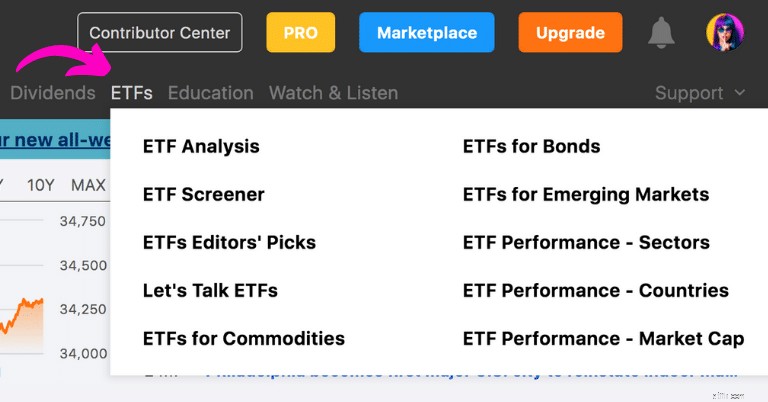
Det eneste logiske sted, jeg ville lede efter ETF'er på nye markeder, ville være under ETF-fanen – men der er stadig ikke yderligere information om ETF'er på nye markeder.
I virkeligheden skal du klikke på "ETF Screener" og "ETF Performance – Sector" for at finde de bedste ETF'er på nye markeder.
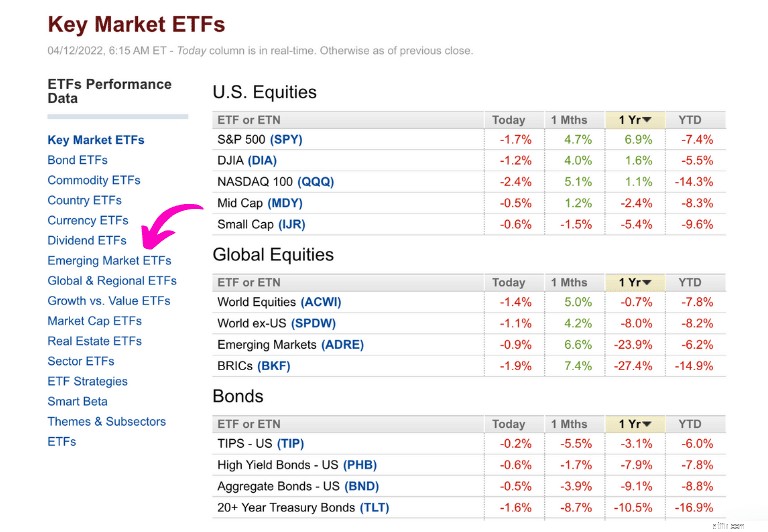
Derfra skal du klikke på værktøjslinjen til venstre for rent faktisk at sortere efter ETF-kategorien (i dette tilfælde nye markeder), som du leder efter.
Overordnet set har Seeking Alpha bygget en fantastisk grundlæggende forskningsplatform for enhver investor.
Du har sandsynligvis lige en lille indlæringskurve, før du bliver helt fortrolig med platformen og hvordan den fungerer.
Seeking Alpha har 3 planer, hvoraf 2 er betalte versioner:
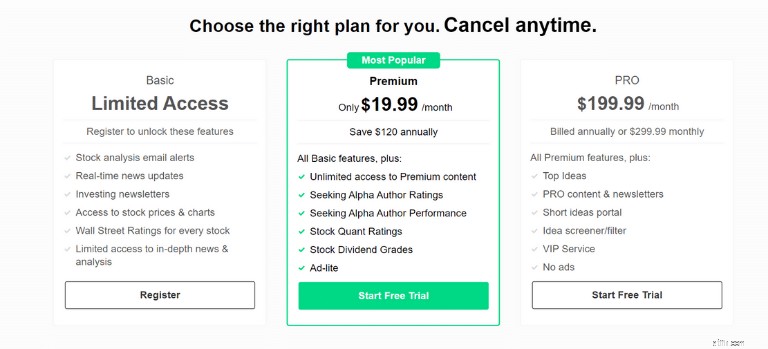
Jeg bruger Premium-planen, og jeg er meget tilfreds med dens funktionalitet og dens funktioner.
Her er, hvad du kan forvente, når du åbner en konto hos Seeking Alpha:
Minimumsomkostninger
$0 [Begrænset adgangsplan]
Maksimal pris
$199,99/måned [Pro Plan]
Betalingsmetoder
– PayPal
– Kreditkort
Husk, at dine Premium- (eller Pro-planer) vil blive faktureret årligt for at dække de månedlige omkostninger på $19,99 (Premium) eller $199,99 (Pro).
Ellers betaler du 29,99 USD/måned (Premium) og 299,99 USD/måned (Pro).
Her er en kort oversigt over, hvad du får med hvert Seeking Alpha-abonnement:
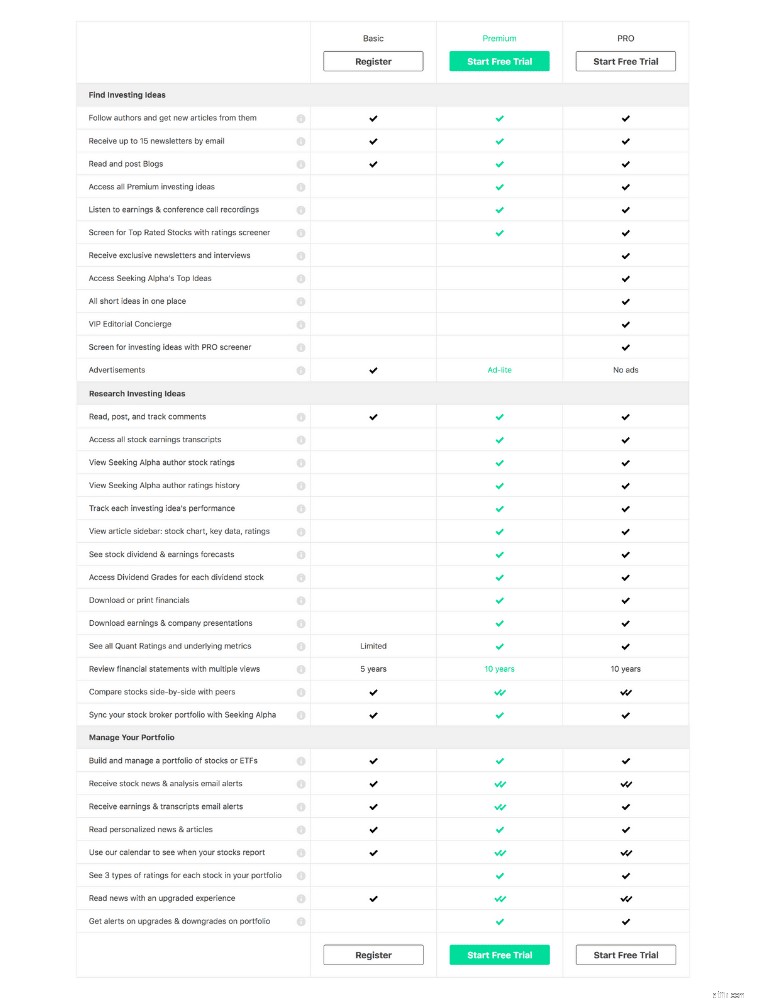
Den gode nyhed er, at du kan starte en gratis 14-dages prøveperiode med Premium-planen og endda Pro-planer.
Typisk set bør du modtage en påmindelse via e-mail et par dage før prøveperioden slutter, men jeg har læst flere klager over, at kreditkortene blev debiteret, lige da prøveperioden sluttede.
Fortsæt med at læse følgende passage, for jeg vil forklare mere detaljeret om hver tjeneste, og hvad du får for pengene.
Om en Seeking Alpha-plan er prisen værd, afhænger virkelig af dig og dine mål.
Nedenfor har jeg opdelt en simpel graf for at vise dig, hvilken plan der sandsynligvis ville være bedst, hvis du:
Læs artikler dagligt
✔️
✔️
Interagere med forfattere
✔️
✔️
E-mail-advarsler
✔️
✔️
Ingen annoncer
✔️
Nyd Analytics
✔️
✔️
Ønsker VIP-service
✔️
Ønsker eksklusivt indhold
✔️
Er en daghandler
✔️
✔️
Penge er ikke en bekymring
✔️
Personligt synes jeg, at Premium-planen er perfekt til alle, der er en normal person og ønsker at:
Medmindre du virkelig er en daytrader eller driver din egen lille virksomhed og har brug for det ekstra eksklusive touch, vil jeg sige, at Premium Planen nok er den bedste værdi i betragtning af, hvad du bruger.
Selvom det er næsten umuligt at slå markedet konsekvent, giver Seeking Alpha dig helt sikkert den fordel, at du klarer dig bedre end markedet.
Faktisk har Seeking Alphas kvantitative algoritme siden 2010 klaret sig væsentligt bedre end S&P 500 og slået den 9 ud af 10 gange.
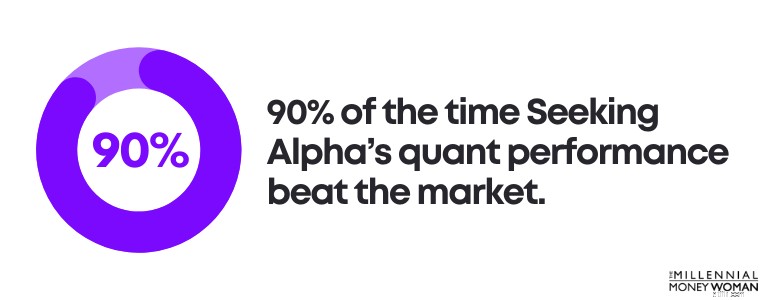
"Very Bullish"-aktierne gav et afkast på 1.754 %, mens S&P 500 kun gav 385 %.
Så hvordan får du adgang til et værktøj, der dramatisk øger dine odds for at overgå markedet?
Ved at tilmelde dig Seeking Alpha Premium-pakken .
Tænk over det på denne måde:
Bare husk på, at tidligere præstationer ikke nødvendigvis indikerer fremtidige præstationer.
Hvis du ikke er klar til at bruge penge på Seeking Alpha og bare vil tilmelde dig den gratis plan, så tjek denne sektion, dedikeret til den begrænsede adgangsplan:
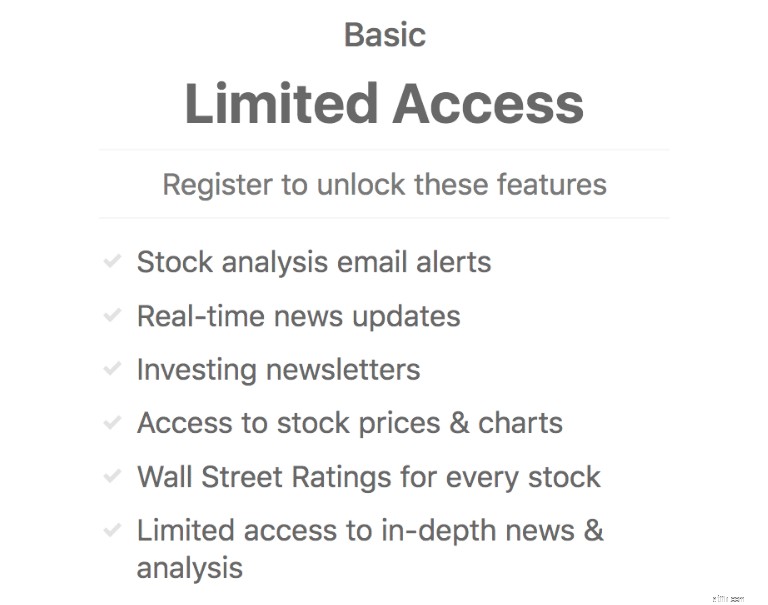
Med abonnementet med begrænset adgang omfatter nogle ting, du kan gøre:
Nogle ulemper med abonnementet med begrænset adgang omfatter:
Hvis du finder dig selv interesseret og ønsker mere, så overvej at abonnere på en af Seeking Alphas betalte planer (Premium eller Pro).
Det smarte ved Seeking Alpha Premium (og Pro) planen er, at du kan starte en gratis 14-dages prøveperiode for at teste planen, før du forpligter dig økonomisk.
Du kan til enhver tid annullere din prøveperiode for at sikre, at du ikke bliver opkrævet det fulde beløb (hvilket Seeking Alpha kan gøre, hvis du ikke annullerer, før prøveperioden slutter).
Hvis du nød prøveperioden med Premium-planen, kan du betale for Premium-planen på 3 måder:
Månedsplan
29,99 USD/måned
Årsplan
$239 (eller $19,99/måned, som annonceret)
3-års plan
540 USD (eller 14,99 USD/måned)
Det ser ud til, at standardsagen for Seeking Alpha opkræver hele årets præmier på forhånd (altså $239 for Premium Plan).
En af de største fordele ved at tilmelde dig Premium-planen i forhold til Limited Access-planen er, at du får eksklusiv adgang til investorfællesskabet, så du kan:
Jeg er en Premium Plan-bruger, og det, jeg bedst kan lide, er, at du bogstaveligt talt kan brainstorme ideer med dine jævnaldrende om din næste investering.
I dette afsnit vil jeg forklare i detaljer nogle af mine foretrukne Premium Plan-funktioner, og hvordan du kan drage fordel af hver.
Her er en oversigt over Seking Alpha Premium-funktionerne:
Hvis du vil vide mere om disse funktioner, så fortsæt med at læse.
I modsætning til abonnementet med begrænset adgang, som kan have mange annoncer, tilbyder Premium-abonnementet en "ad-lite" brugeroplevelse.
Som et eksempel kan du modtage nogle bannerreklamer gennem hele din browsing, såsom følgende:
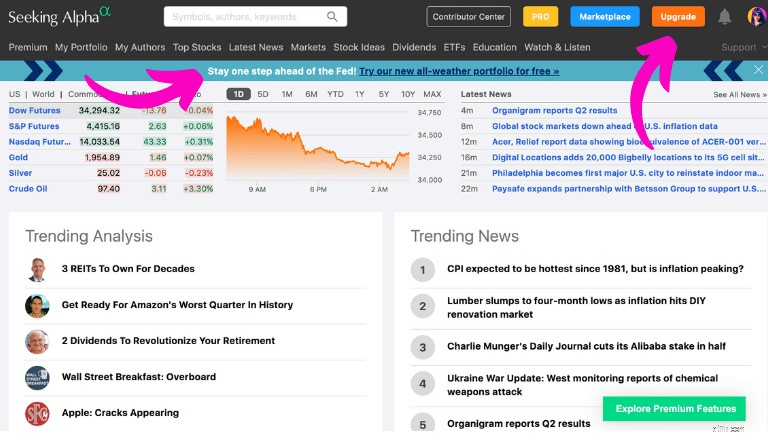
Som du kan se med mit Premium-abonnement, promoverer Seeking Alpha nogle af sine produkter (i dette tilfælde Pro-pakken).
For at være ærlig er jeg ikke rigtig generet af disse annoncer og tror ikke, de tager min oplevelse væk.
Er du i tvivl om en aktie er over- eller undervurderet?
Tjek Wall Street-vurderingerne for den aktie, og rul til afsnittet "Prismål".
I dette tilfælde brugte jeg Google som et eksempel, så lad os tage et kig på Googles prismål (og fra april 2022 handlede Google til 2.595,93 USD).
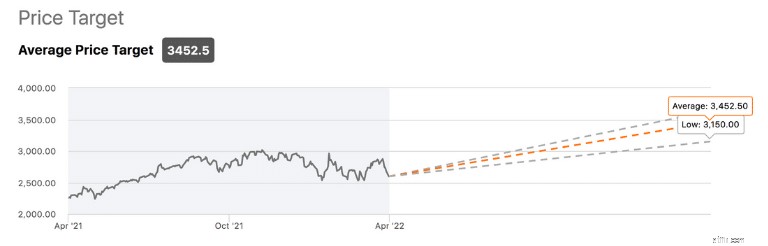
Med andre ord, baseret på kursmålet ($3.452,50) kontra den faktiske pris på aktien ($2.595,93), er Google-aktien faktisk undervurderet.
Det er sandsynligvis grunden til, at 98 % af analytikerne i Wall Street Ratings-sektionen værdsætter Google enten som et "Køb" eller et "Stærkt Køb".
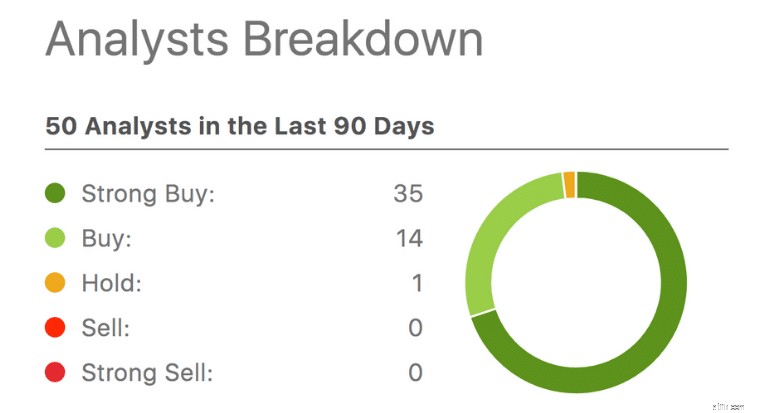
Grafen nedenfor er endnu et pænt eksempel på prismålfunktioner.
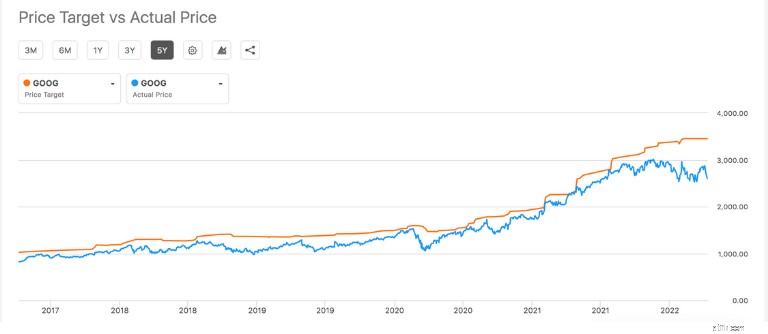
I Kursmål vs. faktisk pris-grafen vil du se, at kursmålet (i rødt) næsten altid har været lidt højere end Googles faktiske pris (i blåt).
Så hvis du er en værdiinvestor ønsker du at købe aktier, der i øjeblikket er undervurderede, kan du overveje Google som en investering.
Nu husker du måske også GameStop ($GME) fiaskoen tilbage i begyndelsen af 2021, hvor handlende på Reddit stak penge ind i den svigtende $GME-aktie, hvilket forårsagede nogle store økonomiske forhindringer for hedgefonde og investeringsplatforme som Robinhood.
Ja, nogle mennesker kan have tjent penge i denne kortvarige saga, men de har sandsynligvis tabt penge.
Tag et kig på Kursmål-grafen nedenfor, som ville have vist enhver rationel investor, at det var et risikabelt træk at pløje penge i $GME:
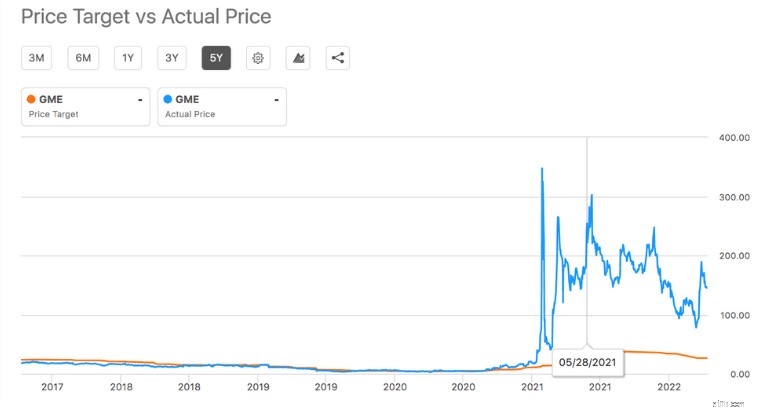
Som du kan se, har kursmålet (i rødt) konsekvent svævet omkring et par dollars, mens den faktiske $GME-pris steg op til over $300 på et tidspunkt.
Husk, at fokus på kun 1 datapunkt alene, ligesom kursmålet, ikke bør være den afgørende faktor for, om du køber eller sælger en aktie. Et kursmål er blot en vejledning, der bør overvejes i sammenhæng med anden information.
Hvis du er en melleminvestor, der ønsker at brainstorme nye investeringsideer, vil du måske abonnere på Seeking Alpha's Notable Calls.
Du kan abonnere på Notable Calls og modtage syntetiserede og opsummerede ideer fra virksomheder over hele verden.
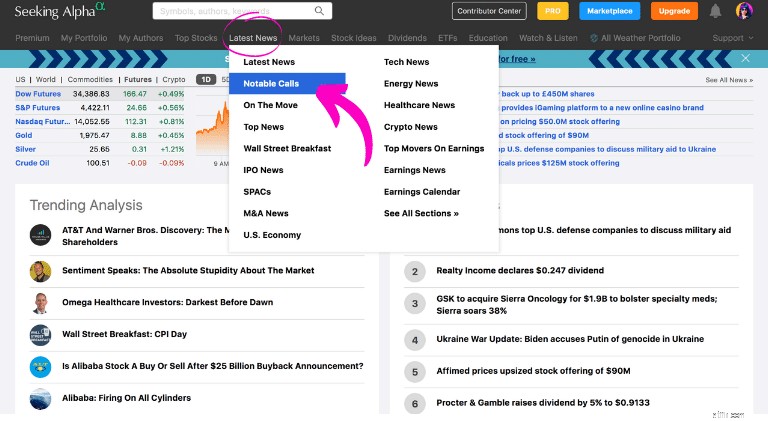
Du kan læse afsnittet Notable Calls ved at klikke på "Seneste nyheder" og derefter klikke på "Notable Calls."
Når du er i afsnittet Notable Calls, kan du udforske forskellige emner (alt lige fra fiberoptik til tøjmærker som Levi Strauss).
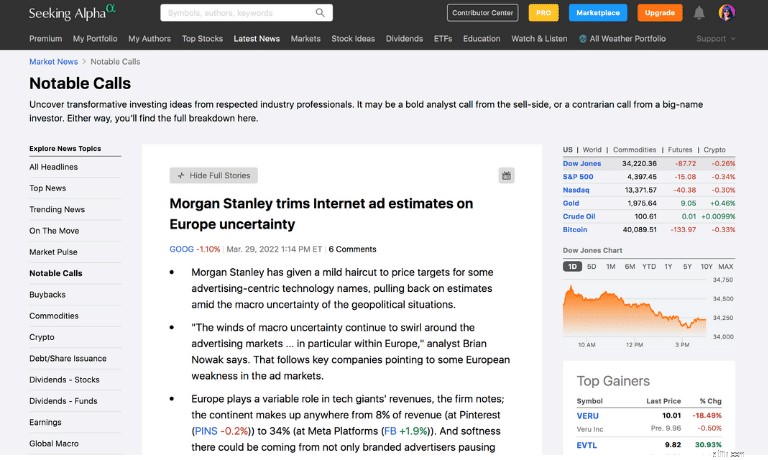
De bemærkelsesværdige opkald udgives ikke dagligt - nogle gange kan det endda tage en måned for nye oplysninger at udfylde afsnittet om bemærkelsesværdige opkald.
Fordi Notable Calls-artiklerne ikke udgives konsekvent, skal du sørge for at fortsætte med at læse bidragyderartiklerne fra Seeking Alpha-ekspertforfatterne for at samle flere investeringsideer.
Da Seeking Alpha er en crowdsourcing-platform, kommer det ikke som nogen overraskelse, at hver aktie også kommer med en Seeking Alpha-forfattervurdering.
Hvis du f.eks. tager et kig på oversigtssiden for AT&T Inc., vil du se vurderingerne for $T-aktien opdelt efter kategori:
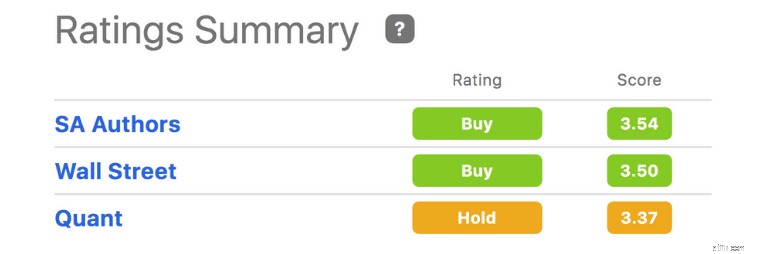
Klik på det blå hyperlink "SA Authors" for at lære mere om Seeking Alpha-forfattervurderingerne.
Her vil du se Seking Alpha Author Ratings for en aktie som:
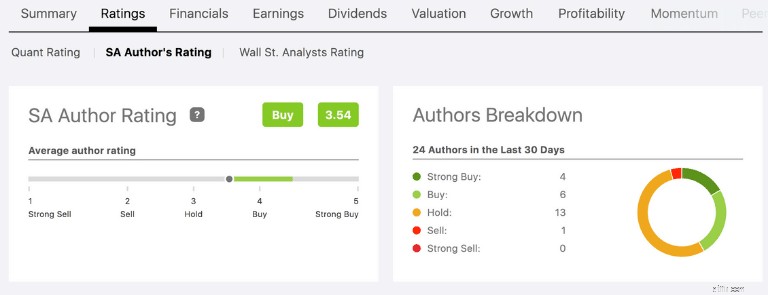
Blandt andre faktorer kan du se Seking Alpha Author Rating-bedømmelsen og Authors Breakdown for hver vurdering.
I AT&T's tilfælde anbefalede 10 ud af 24 forfattere at købe eller stærkt købe aktien (ca. 42%).
Desuden kan du også gennemgå forfattervurderingernes track record for de seneste par år:
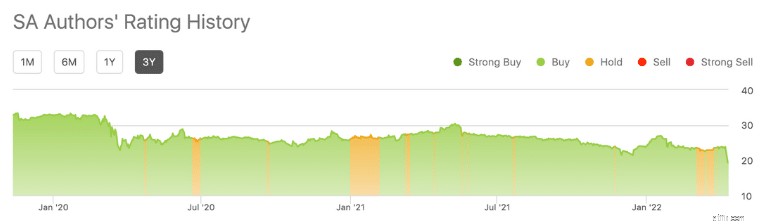
Baseret på denne graf har Seeking Alpha-forfatterne generelt anbefalet "Køb" eller "Stærkt Køb" AT&T i løbet af de sidste 3 år.
Det har lige været for nylig, at forfatterne har foreslået at "Hold" i stedet for at købe.
Til sidst kan du også vælge at se vurderingshistorikken efter forfatter:
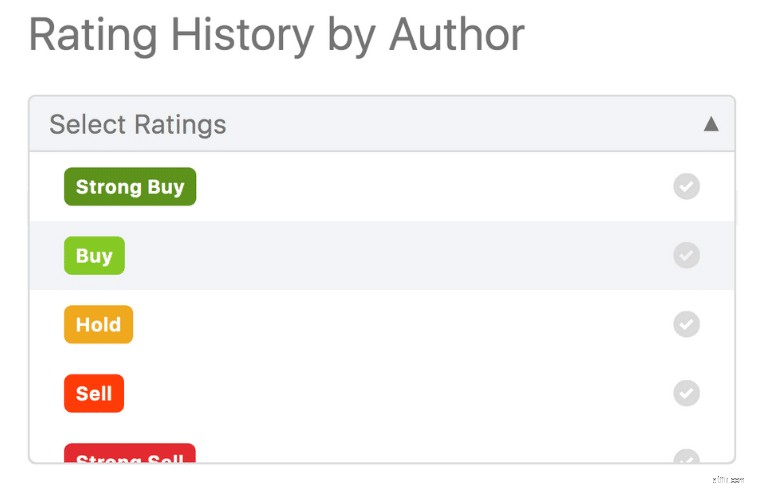
Så hvis du er nysgerrig efter at se, hvilke forfattere der f.eks. bedømte AT&T som et "Køb" versus et "Sælg"-forslag, er dette stedet at gøre det.
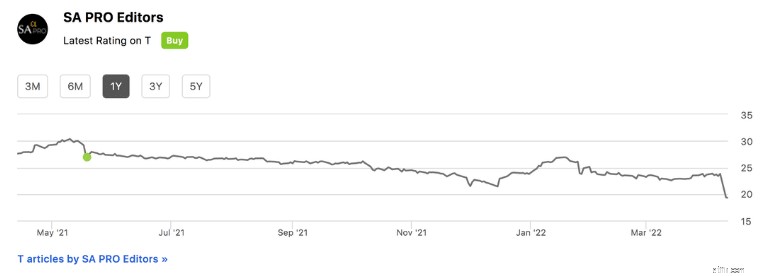
Ovenfor er et skærmbillede af en forfatter, der anbefalede at købe AT&T-aktier.
Hvis du undrer dig over, hvorfor forfatteren anbefalede at gøre det, kan du klikke på det blå hyperlink for at læse om forfatterens AT&T-artikler.
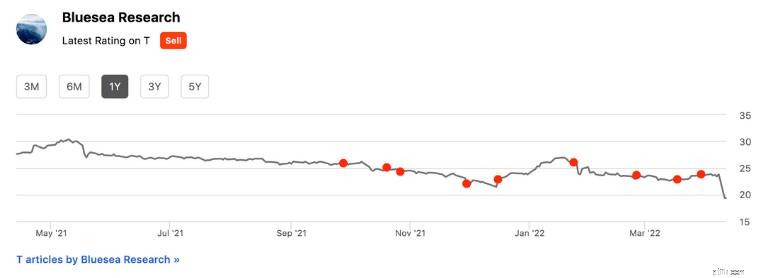
På samme måde, hvis du finder en forfatter, der har foreslået at sælge $T-aktien, kan du finde ud af, hvornår forfatteren foreslog at gøre det (se de røde prikker på grafen i forhold til $T-aktiens præstation).
Igen kan du læse artikler af denne forfatter på AT&T ved at klikke på det blå hyperlink under forfatterens salgsdiagram.
Hvis du er en udbytteinvestor , dette er en af de fedeste funktioner, du finder:The Dividend Grade Tool.
Kort sagt er Dividend Grade-værktøjet designet til at hjælpe investorer med at afgøre, om et udbytte er sikkert, og om udbytteindkomsten vil være stabil, stige eller muligvis falde.
Der er 4 forskellige udbyttegrader, som er forklaret nedenfor:
Udbyttesikkerhed
Måler et udbyttes rentabilitet og stabilitet
Udbyttevækst
Måler et udbyttes vækstpotentiale ved at bruge historiske og estimerede vækstrater (inkluderer omsætning, pengestrøm, overskud osv.)
Udbytte
Måler et udbyttes historiske afkast og sammenligner afkastet med andre aktier i samme branche for at bestemme udbyttets fremtidige afkast
Udbyttekonsistens
Måler sammenhængen mellem en virksomheds udbyttebetalinger og udbytteforhøjelser
En grund til, at investorer, især passive investorer, kan lide udbytte så meget, er fordi udbytte er en form for passiv indkomst .
Og jo flere udbyttebetalende aktier du køber, over tid kan du virkelig begynde at tjene nogle penge bare gennem udbyttebetalende aktier.
Tag et kig på AT&T's nuværende udbyttekarakterer (fra april 2022):
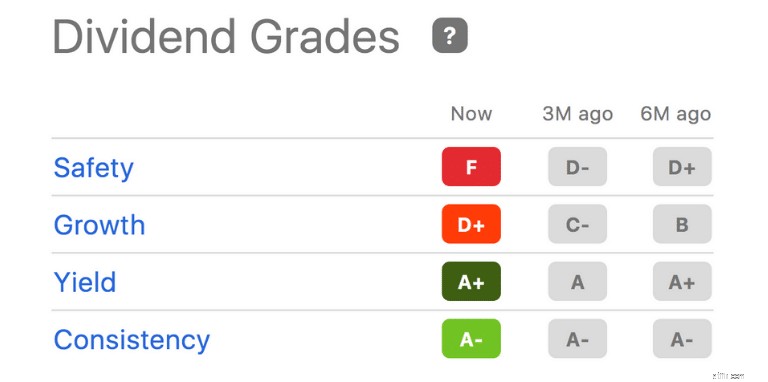
Det, jeg godt kan lide ved udbyttekaraktererne, er, at du kan se de nuværende karakterer sammenlignet med dem fra 3 måneder siden og endda 6 måneder siden.
Det er klart, at udbyttesikkerheden for AT&T er i fare. Dette betyder, at AT&T kan reducere eller endda eliminere sit udbytte.
Og det er sandt – tag et kig på det røde advarselsbanner, når jeg skriver $T i søgefeltet:
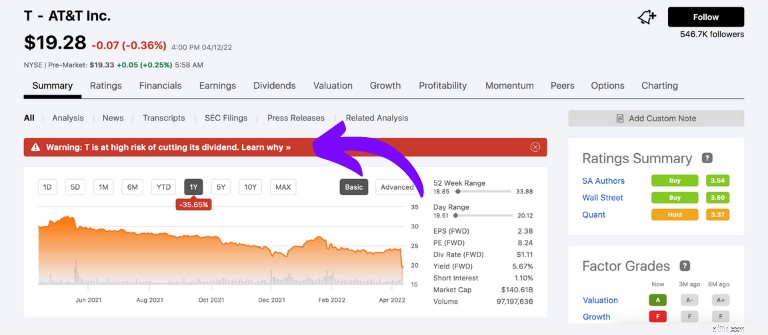
Uden selv at se på udbyttekaraktererne får jeg straks besked om, at AT&T kan skære i udbyttet.
Hvis du vil vide mere om det, skal du blot klikke på banneret:
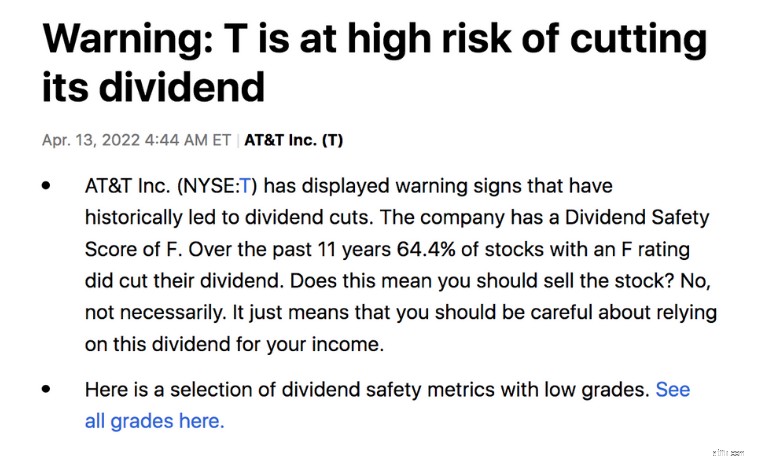
Du vil blive omdirigeret til en artikel med en yderligere analyse af, hvorfor AT&T muligvis skærer i udbyttet i den nærmeste fremtid.
Hvis du nu ønsker at gå mere i dybden med hensyn til de individuelle udbyttekarakterer, skal du blot klikke på det blå hyperlink for hver udbyttekarakter:
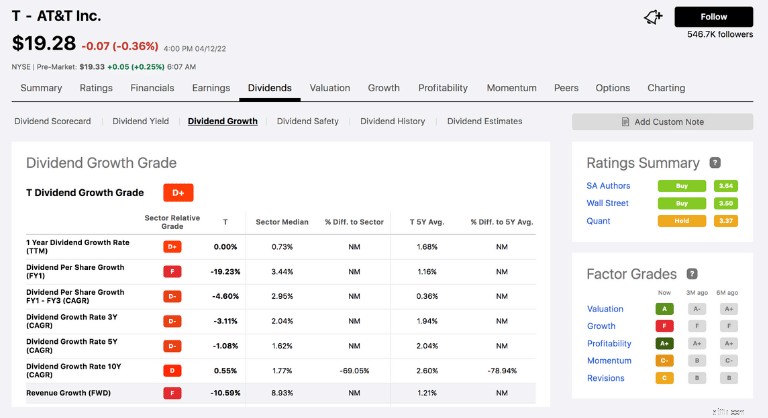
For eksempel, i skærmbilledet ovenfor, vil du se et uddrag af, hvor dybdegående du bliver bare ved at læse om udbyttevækstkarakteren.
Jeg foretrækker at tjekke fanen Dividend History, som ser sådan ud:
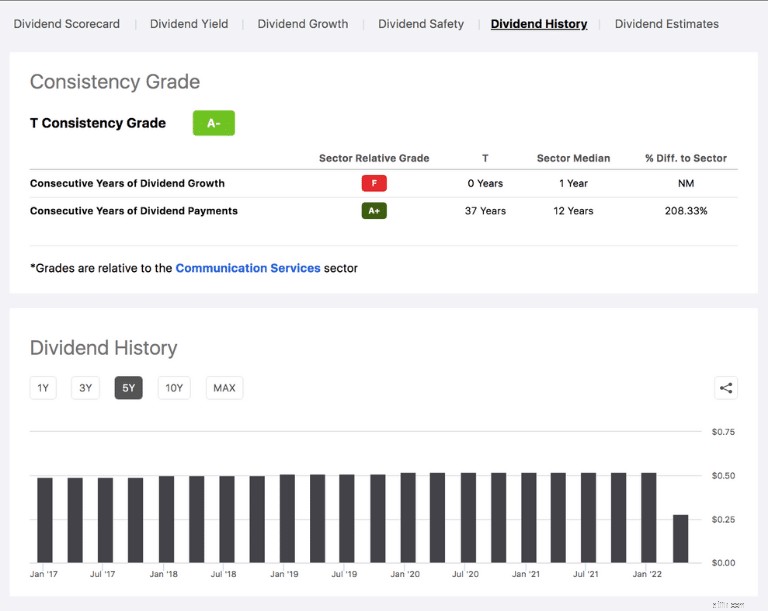
Som du kan se, har AT&T i løbet af de sidste 5 år haft en meget konsekvent udbyttehistorie – men pr. 12. april 2022 faldt udbyttet fra $0,52 til $0,28.
Det er en meget drastisk nedskæring og signalerer typisk en bekymring for investorerne.
Endelig, hvis du ønsker at lære mere om fremtidige udbyttevurderinger (som ikke er en del af de oprindelige 4 udbyttekarakterer), kan du klikke på den tilsvarende fane:
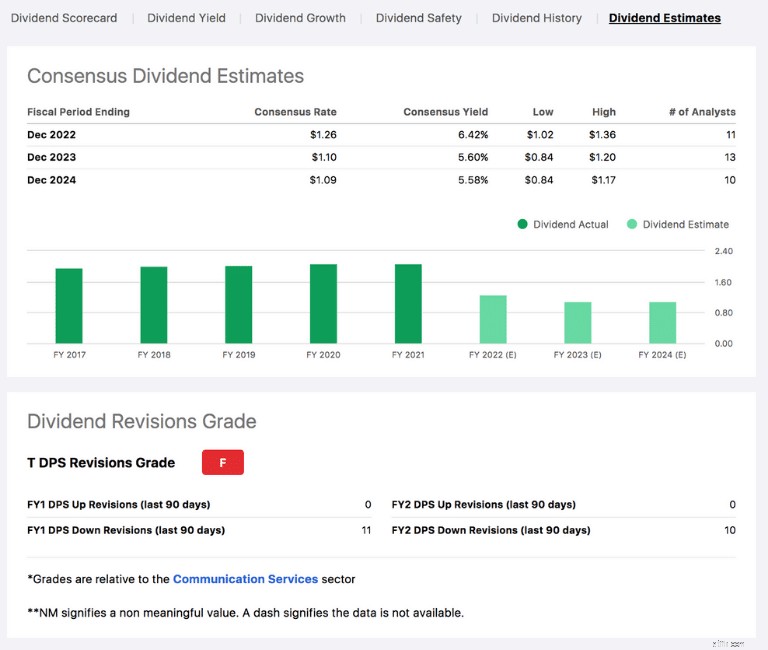
Som du kan se, forudsiger estimaterne for udbyttevækst ikke, at udbytteudbyttet vil vende tilbage til AT&T's oprindelige niveauer, i hvert fald ikke i de næste par år.
Hvis du er en person, der bare gerne vil læse om de vigtigste og mest presserende aktienyheder uden at komme ind i det små, så brug nyhedsdashboardet.
Du kan komme til nyhedsdashboardet ved at klikke på fanen "Seneste nyheder".
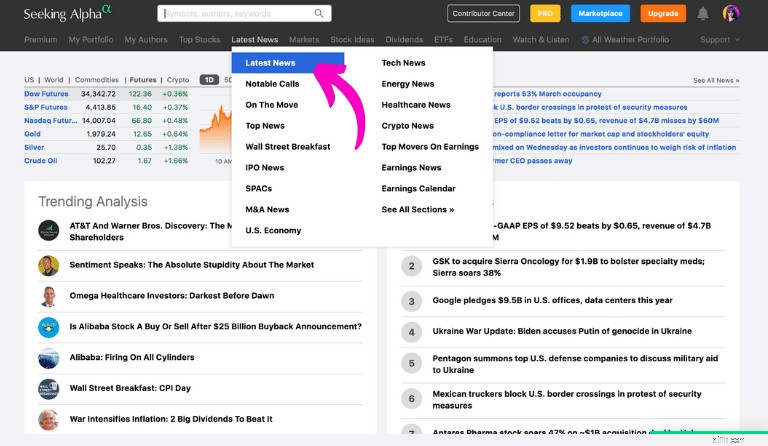
Når du har klikket på fanerne "Seneste nyheder", bliver du omdirigeret til en side med titlen "Markedsnyheder."
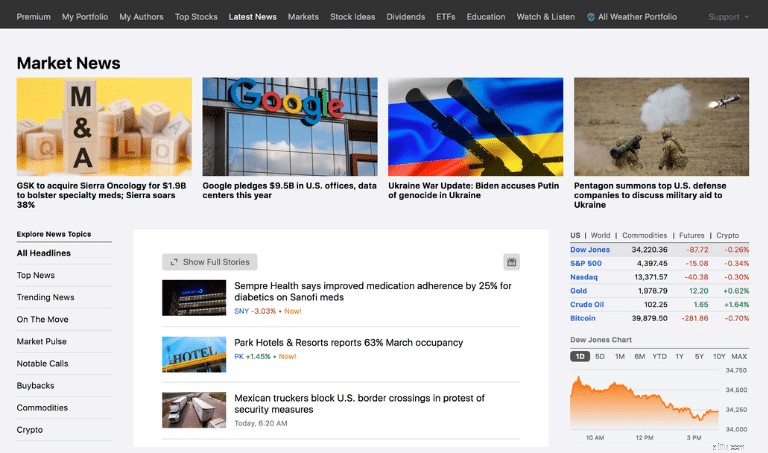
Fra dette dashboard kan du bruge filteret (til venstre) til at udforske emner, der er relevante for dig.
Du kan endda indstille et datointerval for at fokusere dine aflæsninger på en bestemt tidsramme.
I lighed med udbyttekaraktererne kan du muligvis også se, hvad Seeking Alpha kalder et faktorscorekort.
Med andre ord er scorekortet et værktøj til at hjælpe dig med at træffe hurtige beslutninger om, hvorvidt du skal overveje en aktie eller udelukke den, baseret på dine investeringskriterier.
Faktor-scorekortet bruger 5 faktorer, herunder:
Lad os tage et kig på Factor Scorecard for $GME, bedre kendt som Gamestop.
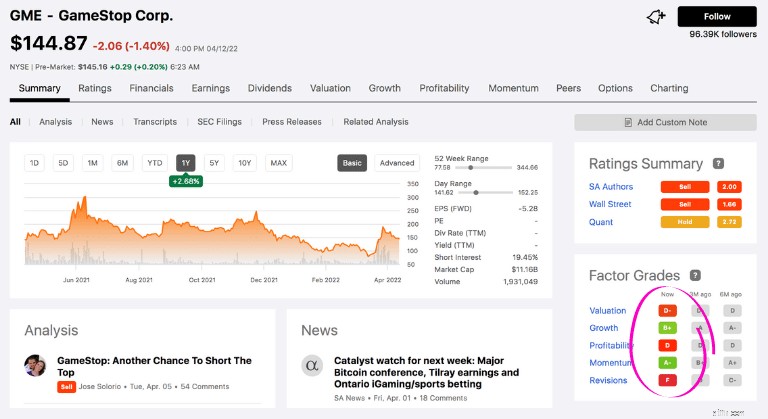
Factor Grades-boksen er opdelt i de 5 kategorier, som jeg nævnte tidligere.
Hver kategoris karakter sammenlignes også med dens tidligere karakter for 3 og 6 måneder siden:
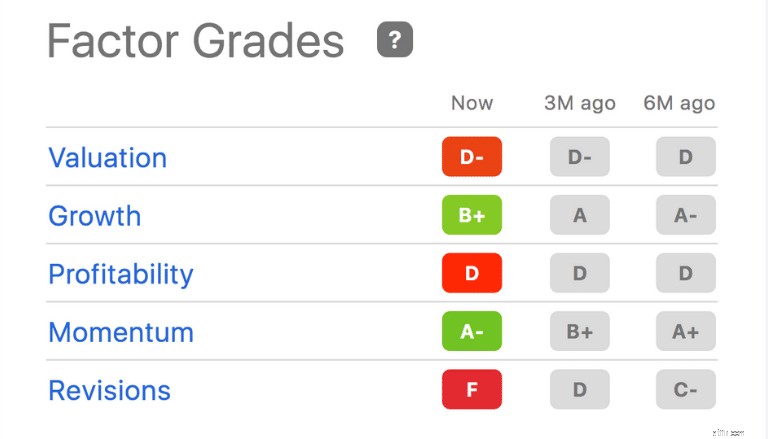
Det er klart, at faktorkaraktererne for Gamestop er ret underordnede. Det betyder, at Gamestop nok ikke er den bedste investering – medmindre du er tryg ved at tage en risiko med en ret volatil aktie.
Hvis du vil bore mere i dybden med hensyn til de individuelle faktorkarakterer, skal du blot klikke på det blå hyperlink for hver karakter.
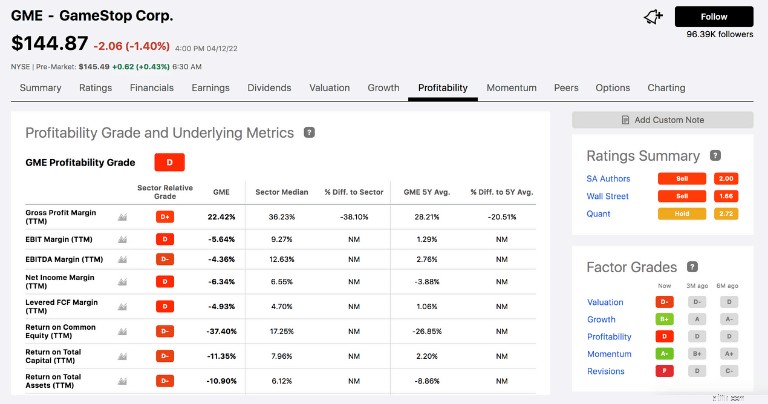
For eksempel, i skærmbilledet ovenfor, vil du se et uddrag af, hvor dybdegående du bliver, bare ved at læse om Profitability of Gamestop.
Jeg kan også godt lide at se på Momentum-fanen for at tjekke den tidligere ydeevne og ydeevnen af $GME sammenlignet med andre benchmarks – som for eksempel S&P 500.
Her er et øjebliksbillede af Gamestops tidligere resultater i forhold til andre virksomheder i sektoren:
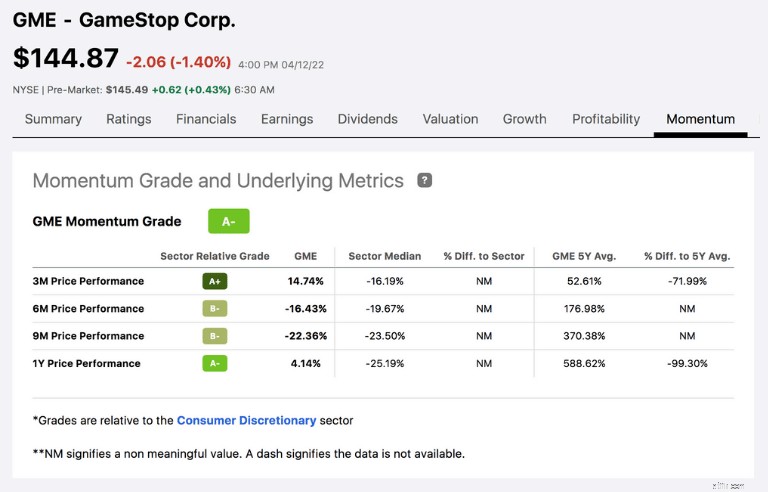
Du kan også tjekke prisen for Gamestop i forhold til visse benchmarks.
I skærmbilledet nedenfor bruges S&P 500 som benchmark:
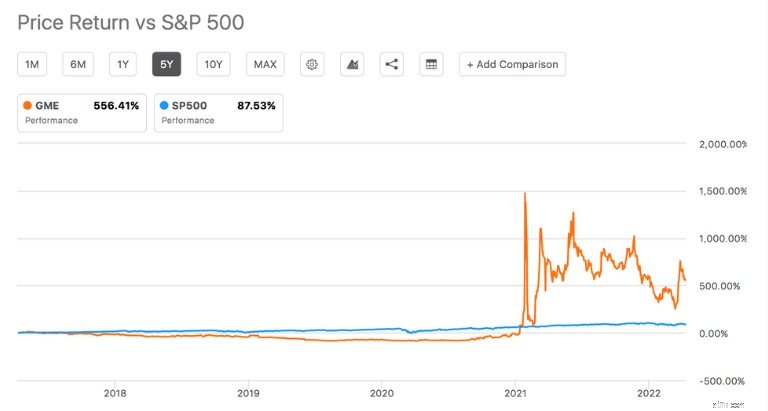
Dette prisreturdiagram fortæller hele historien:
Du kan se, hvordan Gamestop konsekvent klarede sig dårligere sammenlignet med S&P 500, indtil Gamestop-sagaen begyndte i begyndelsen af 2021.
Since early 2021, the Gamestop prices have relatively outperformed the S&P 500 – but is it really a solid investment?
That’s where Seeking Alpha’s tools like the Factor Scorecard can really come into play and help guide you to an answer.
Let’s say you’re thinking about buying Tesla, but you’re not 100% convinced that it’s the right addition to your portfolio.
That’s where the Peer Comparisons come in.
The Peer Comparison tool is customizable, so you can change the stock types that you’re comparing.
Here’s an example:First, search your desired stock (in this case, Tesla):
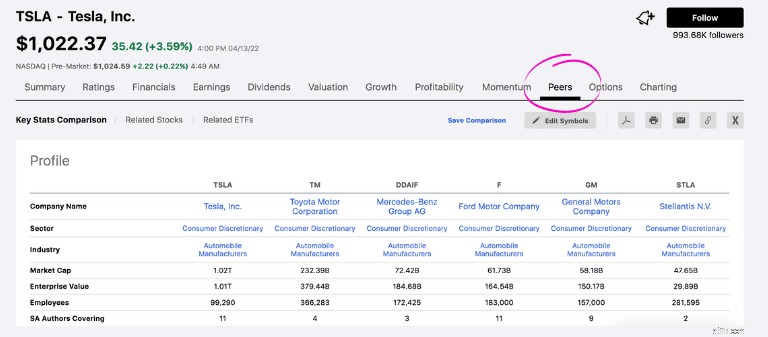
Make sure you click on the “Peers” tab.
Once you’re on the “Peers” tab, you can see that Seeking Alpha already defaults to several peer stocks with which you can compare Tesla.
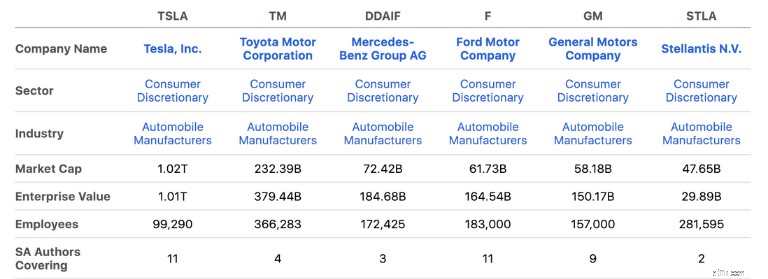
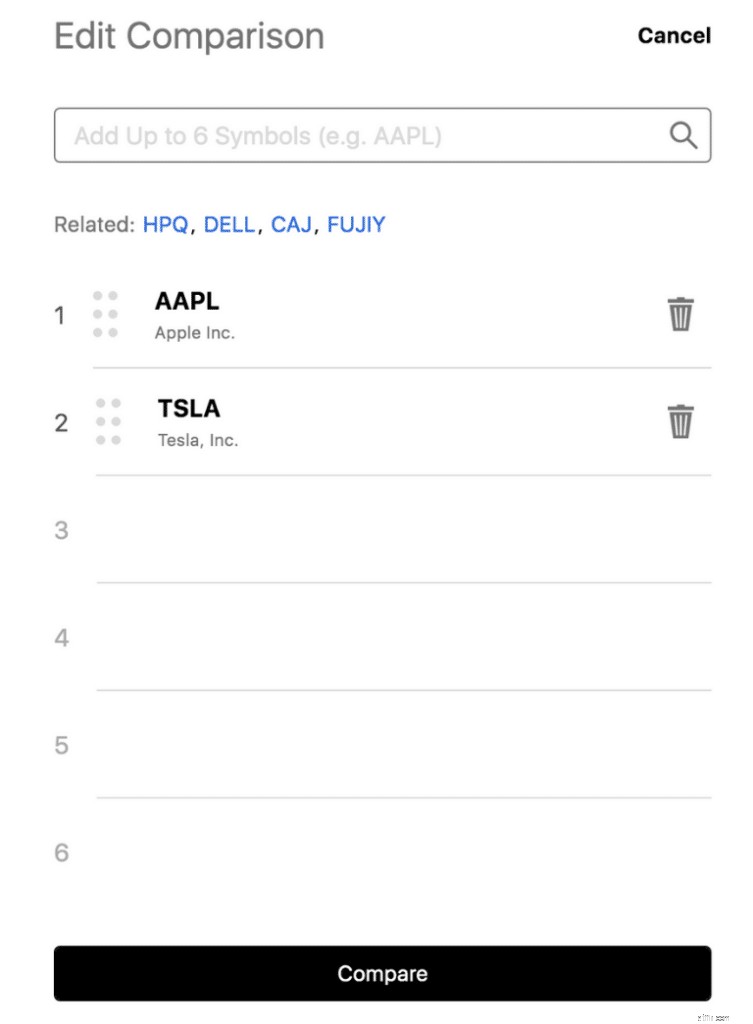
However, if you want to customize the peer comparisons or even reduce the number of peers you’re comparing to, then just click on the “Edit Symbols” button.
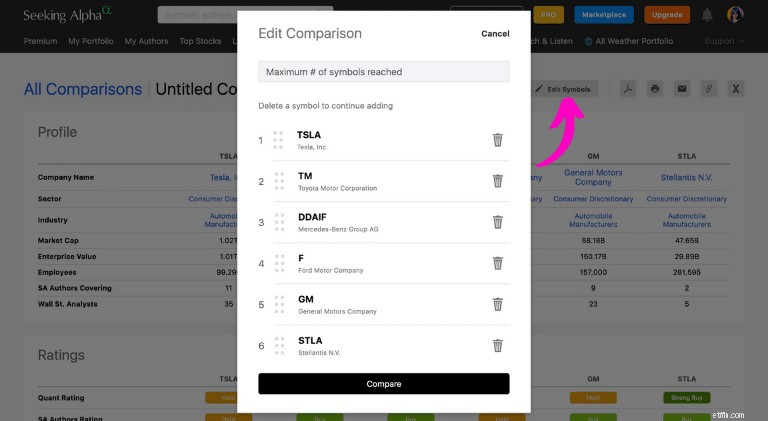
This is where you can customize all peer comparisons.
If you really like a stock and want to receive alerts whenever news about that stock is released, you can customize your own email alerts.
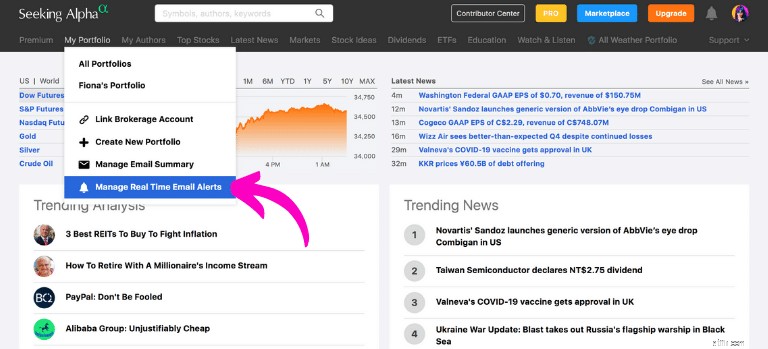
You do this by hovering over the “My Portfolio” tab and then clicking on “Manage Real Time Email Alerts.”
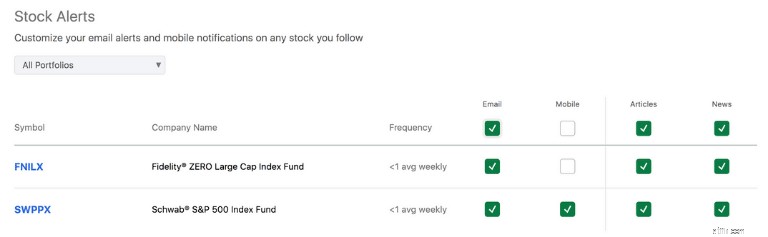
You’ll see a snapshot of your favorite stocks, which you can then select to follow.
The next thing you need to do, is:
I’m a big fan of this alert customization option.
One of the key features when evaluating a stock on Seeking Alpha should be the Quant Ratings section.
Quant Ratings are based on a computer algorithm with the goal to find the best stocks.
As with the previous Ratings (Wall Street and SA Authors), the Quant Ratings compare the stock to other stocks in the same industry.
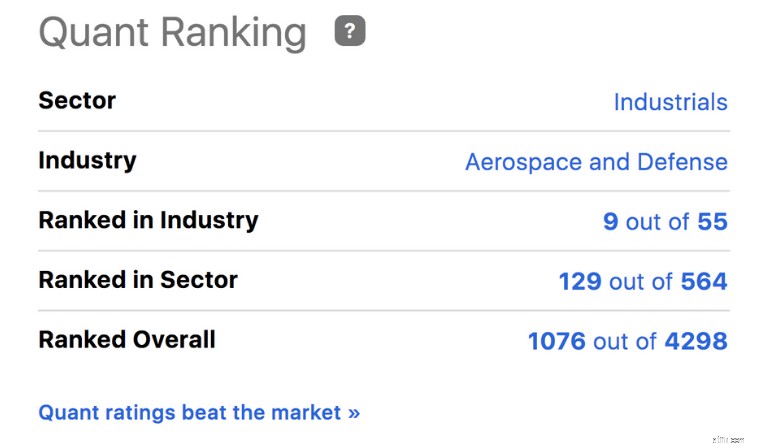
The Quant Rankings use historical information to determine the numbers, as shown in the above screenshot (this case, for Lockheed Martin).
If the Quant Rankings deem a stock to be a top pick, then that stock would be marked as “Strong Buy.”
In Lockheed Martin’s case, the Quant Rankings determined the stock to be a “Hold” for now.
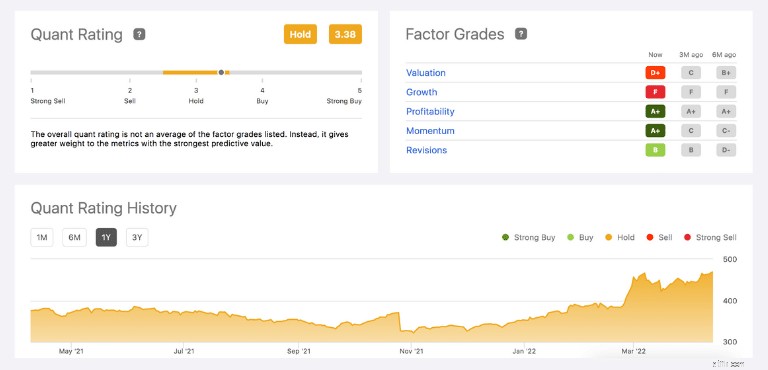
The Quant Ratings and the Factor Grades are both designed and managed by Steve Cress , who has had extensive experience in investment research, hedge funds, and the likes.
The Quant Ratings is what you are looking for – that’s because they can help boost your portfolio performance.
In fact, Seeking Alpha claims that stocks rated as a 4.5 or higher have beat the S&P 500 4x.
On the other hand, stocks rated as 1.5 or lower underperformed the S&P 500, returning roughly 33% of the S&P 500.
Clearly, the Quant Ratings are very helpful.
As you can see, Quant Ratings are a very powerful tool when evaluating the strength of a stock.
But what if you want to view the top-rated stock, using the Quant tools?
Enter the Stock Screener.
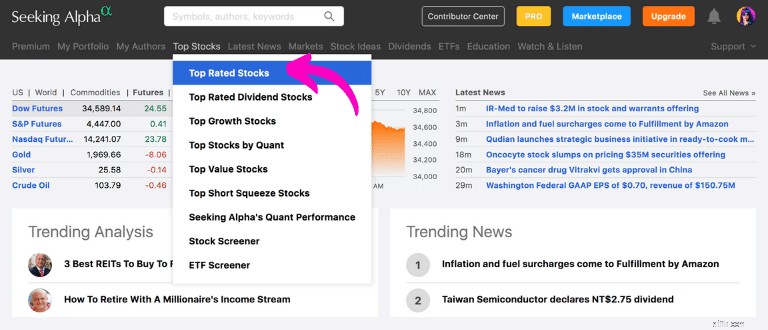
You’ll find the Stock Screener by clicking on the “Top Stocks” tab and then clicking on “Top Rated Stocks.”
From there, you’ll see a summary of the top rated stocks, and typically the highest Quant Rating is 4.99:
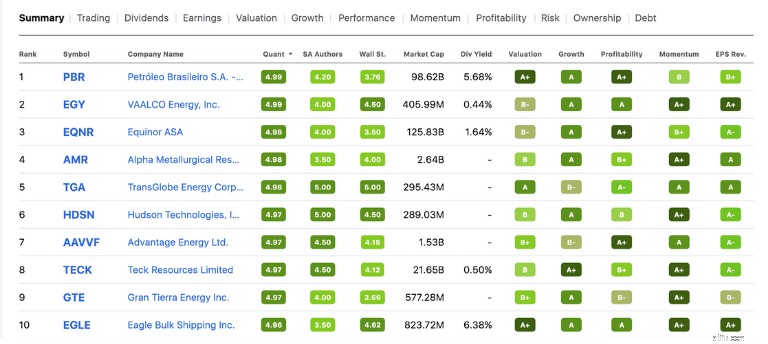
Remember what was said in the previous Quant Ratings section:
Stocks given a Quant Rating of 4.5 or higher have typically outperformed the S&P 500 by up to 4x!
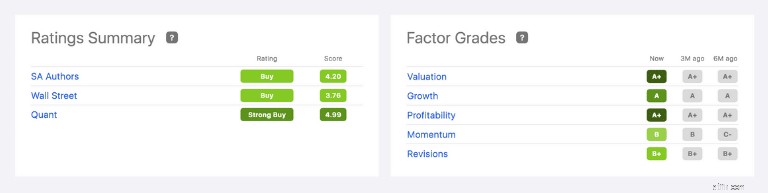
And it’s true that across the board PBR, also known as Petrobas, (in this case the top Quant rated stock) is considered a “Buy” to “Strong Buy” across the board:
This stock screener is a feature that is currently available to Premium users.
Another neat trick with the Stock Screener?
You can customize your own stocks by using up to 100 different filters!
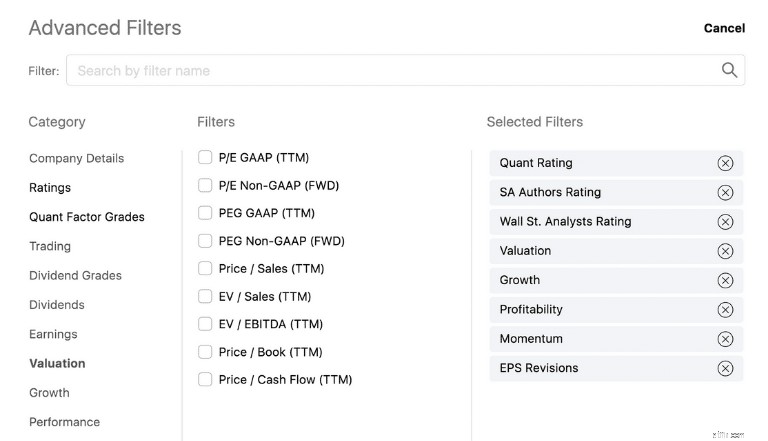
Above is just an example of the many different filter applications you can use to customize your stock screener.
Based on historical performance, stocks ranked as 1.5 or lower drastically underperformed the S&P 500.
If you want to follow what sell-side analysts have to say in terms of buying, holding, or selling a stock, then check out the Wall Street Ratings.
Instead, Seeking Alpha collects data from the Wall Street analysts to determine whether a stock is rated as:
The reason why Wall Street Ratings can be helpful for people like you and me is that these rankings should (in theory) be objective and neutral.
To review the Wall Street Ratings of a certain company, just type in the company name or ticker symbol in the “Search” bar on the top, and then look at the information on the right of the screen.
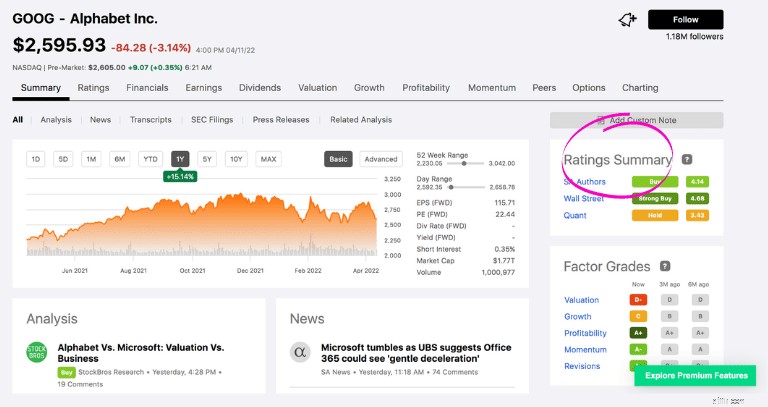
When you look at the right-hand side, you’ll see the “Ratings Summary” outline, with 3 titles:
To learn more about the Wall Street rating, click on the “Wall Street” blue hyperlink.
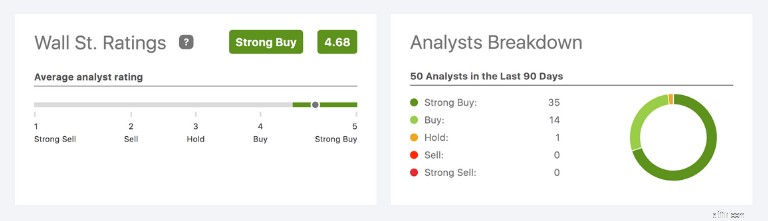
Among other factors, you’ll see the Wall Street average analyst rating and the Analyst Breakdown for each rating.
In Google’s case, 49 out of 50 Wall Street analysts recommended to Buy or Strongly Buy the stock (that’s 98% of analysts!).
Furthermore, you can also review the Wall Street Ratings’ track record for the past few years:
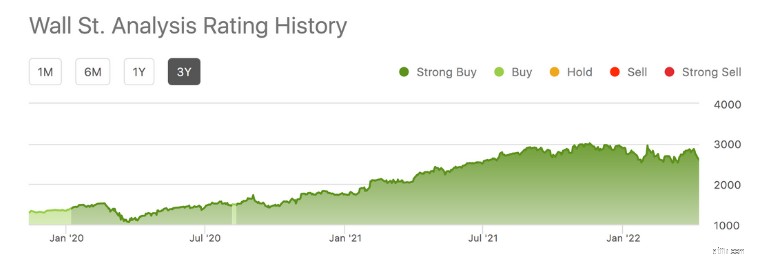
Based on this graph, Wall Street analysts have recommended to Buy or Strongly Buy Google over the past 3 years.
Lastly, you can also see how the Wall Street analysts’ opinions have changed over time with the Recommendations Chart (found at the bottom of the page):
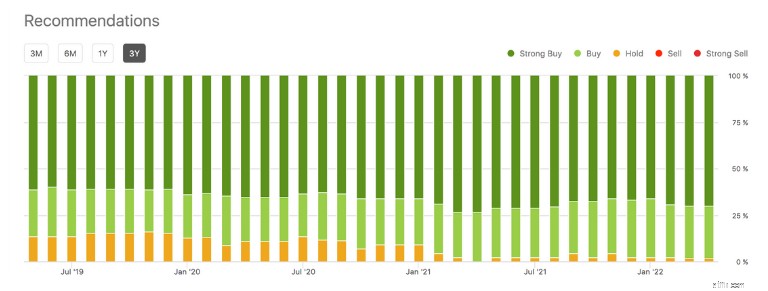
It appears that in 2019 and early 2020 more analysts recommended to hold Google, while starting in 2021, virtually all analysts recommended to buy Google.
Since I’m a very visual person, one of my favorite features on Seeking Alpha is the data visualization of the charts.
In fact, Seeking Alpha has a specific tab named “Charting” that you can access to view the data in an aesthetically pleasing manner:

Once you click on the “Charting” tab, you can even customize the data you want to view.
For example, you can compare one stock’s performance (in the case, Gamestop) to another stock or benchmark like the S&P 500:
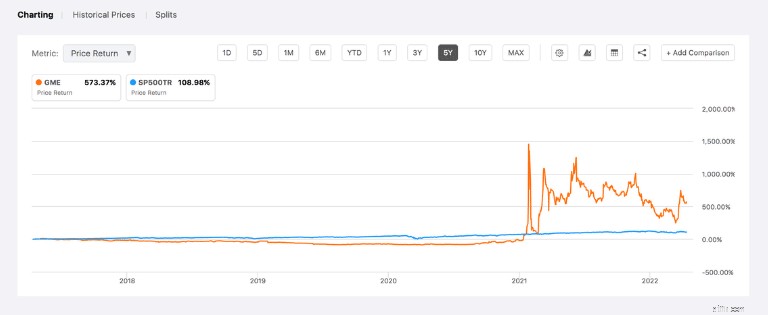
In this custom comparison, you can see that the S&P 500 has typically outperformed Gamestop until early 2021.
If you want to add additional stocks or funds to compare, you can do so, as well:
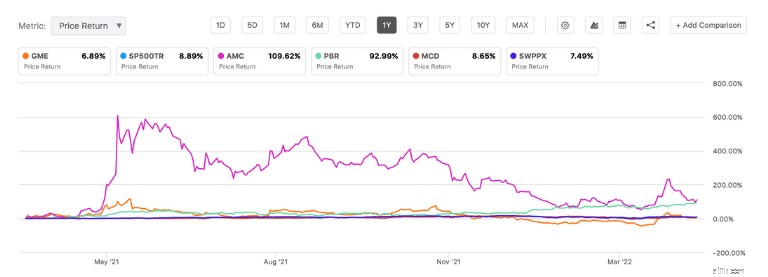
Another neat way to customize your data is changing the format of the data presentation – you can select:

If you’re happy with the data visualization chart you created, you can also copy to clipboard, download, or copy the link to your chart for future reference.
If you’re a Seeking Alpha member, you have exclusive access to earnings calls transcripts.
In most cases, you can expect to have an earnings call at the end of the first 3 quarters.
At the end of the 4th quarter, you’ll receive both an annual report as well as a quarterly report.
If you’re busy at the time of the actual earnings call, you can always count on Seeking Alpha to have a transcript available – both audio and written versions.
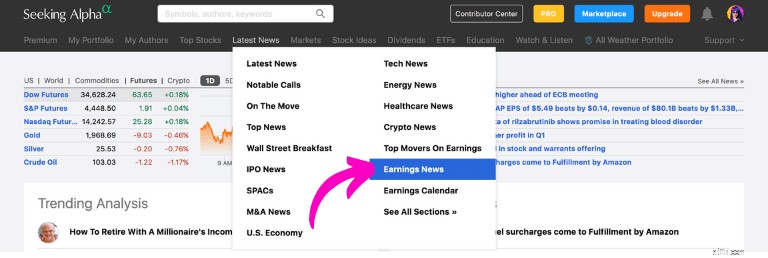
You can access the earnings reports of any publicly-traded company by hovering over “Latest News” and then clicking on the “Earnings News” button.
You can also access a schedule of the upcoming earnings calls by clicking on the “Earnings Calendar.”
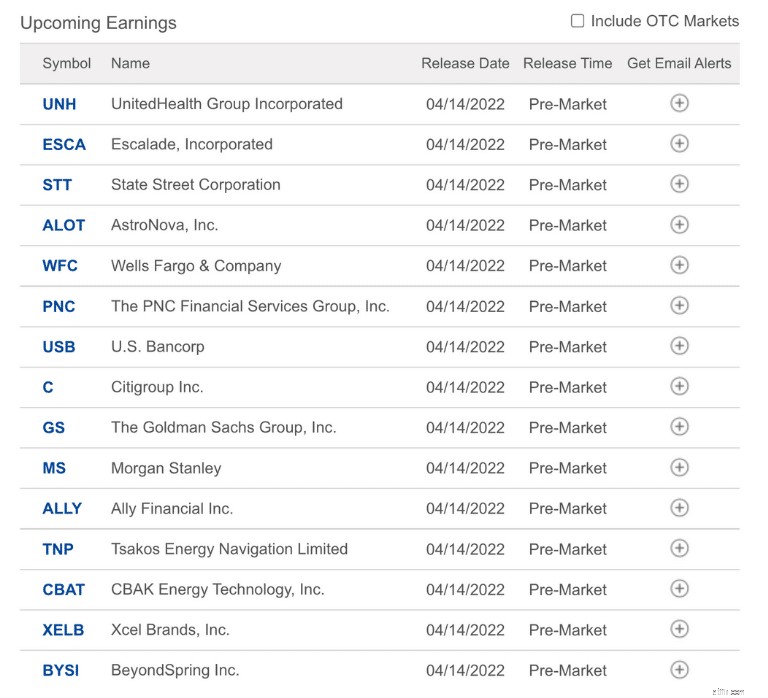
Once in the Upcoming Earnings tab, you can select which company you want to listen to and you can even sign-up for custom email alerts by clicking on the “+” sign.
If you’re looking up one of your favorite companies, let’s call it Amazon, then you just have to click on the “Earnings” tab for that stock:

From there, you can click on the “Transcripts” tab and look at all previous transcripts:
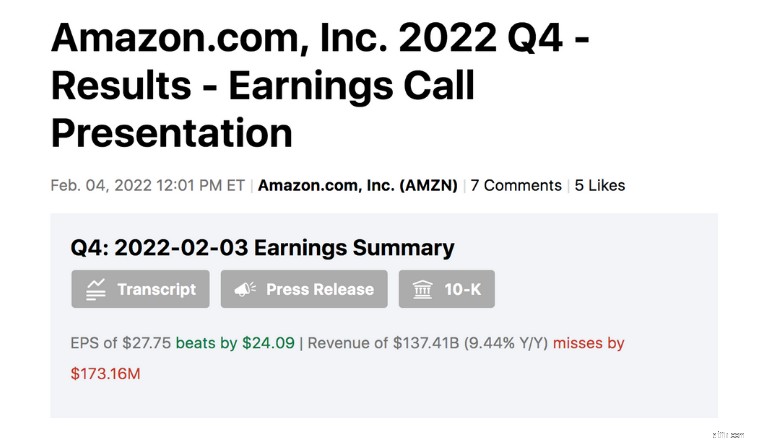
Depending on the company you review, you can also access a PDF file with slides that highlight the company’s key points.
With the Premium (and of course Pro) memberships, you also have unlimited access to exclusive articles written by industry professionals.
Since there is so much information, you can filter out the articles in several different ways.
First, you can simply access your home page and review the “Trending Analysis” of the day or the “Trending News” of the day.
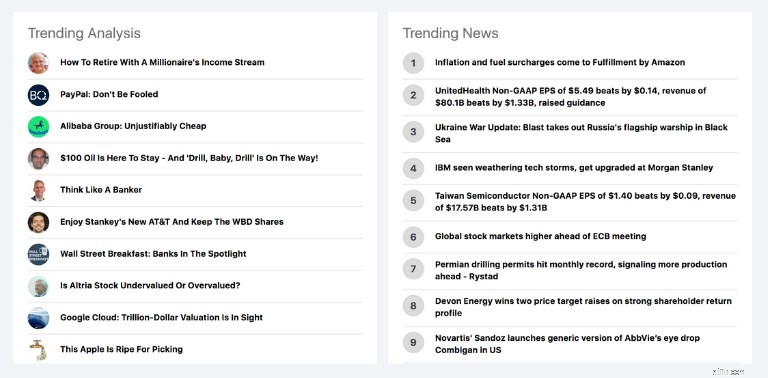
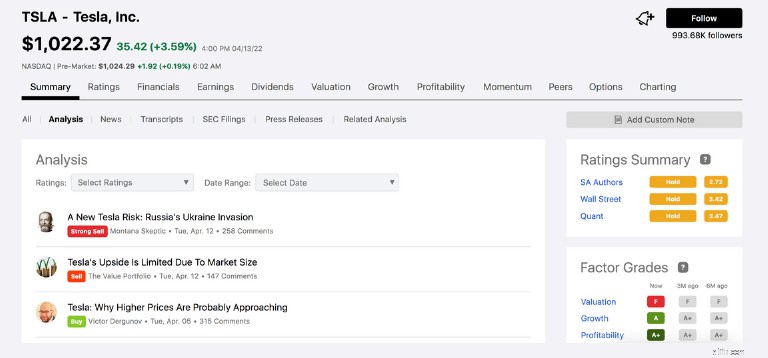
If you want to review articles written by various authors about just 1 particular stock or fund, then just type in the stock name or ticker symbol into the Search Bar.
From there, click on “Summary” and then on “Analysis” so you can see the various articles offered by authors on that stock.
Here’s an example of articles written about the Tesla stock:
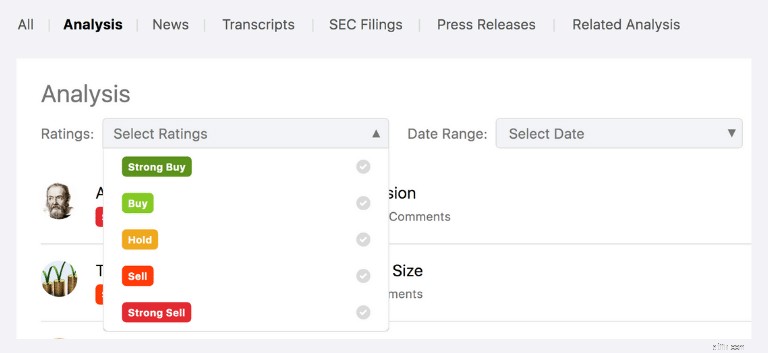
If you want to read articles from authors who advocate buying, selling, or holding, you can customize your ratings by clicking on the “Select Ratings” drop down box.
While most articles do focus on US-based public companies, there are some articles that also focus on alternative investments as well as international companies.
As a Premium Seeking Alpha user, I’m a very big fan of creating your own portfolio in Seeking Alpha.
If you’re dedicated to kickstarting your kids’ financial future, then you may also want to check out the Greenlight Debit Card , which can do wonders.
You can set up your own mock portfolio in Seeking Alpha by hovering over “My Portfolio” and then clicking on “All Portfolios.”
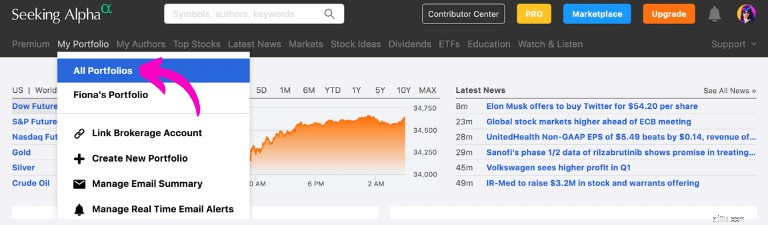
From there, you can click the button titled “+ New Portfolio.”

This will allow you to add a new, mock portfolio while using the Seeking Alpha platform.
You can give that portfolio a title and then you can either link your outside brokerage account to this portfolio or add your own stocks to the portfolio.
For the purpose of this section, we’re going to click on “Create Portfolio.”
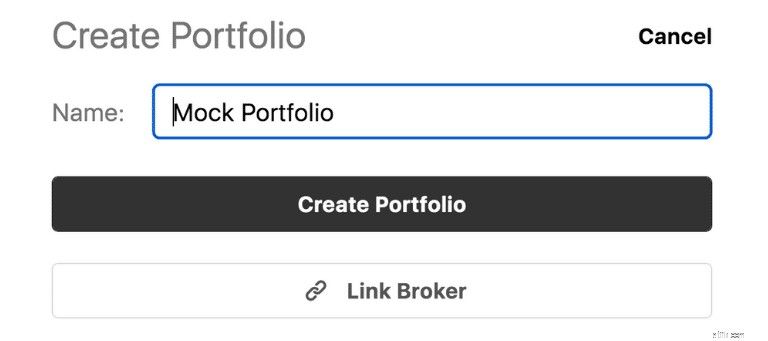
Once you’ve created your portfolio, you can start adding ticker symbols to complete your portfolio.
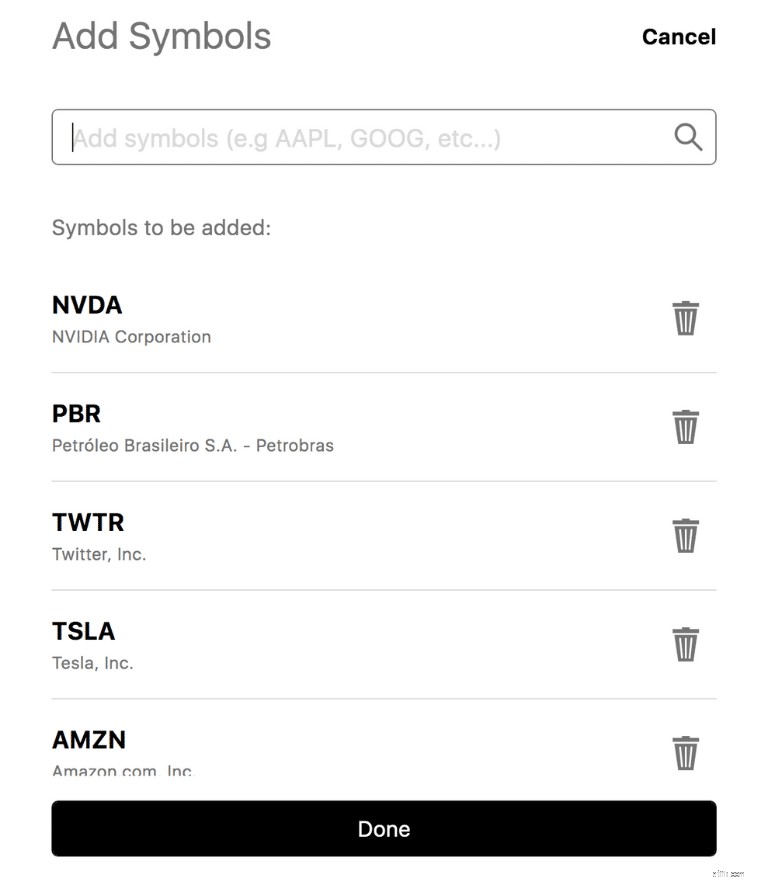
Once you’re happy with your portfolio construction, you can click “Done.”
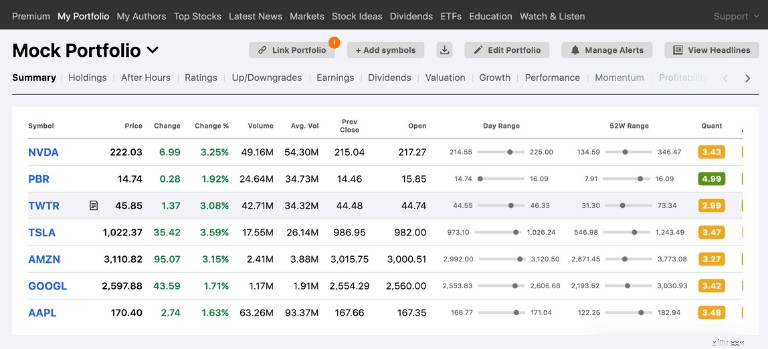
Seeking Alpha does a fantastic job breaking down each stock in your mock portfolio by using multiple different factors.
You can even compare the Quant, SA Authors, and Wall Street ratings to each other:
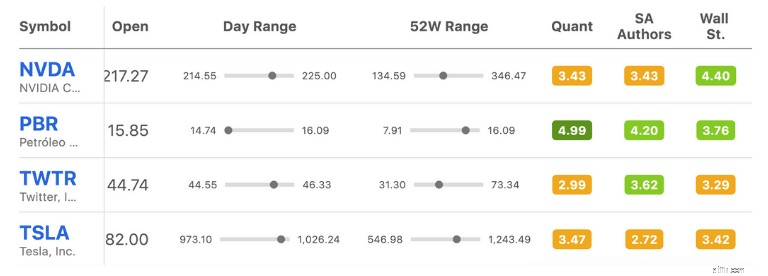
If you click on the “View Headlines” button in your portfolio, you’ll see an assortment of articles written just for your specific stocks in your portfolio:
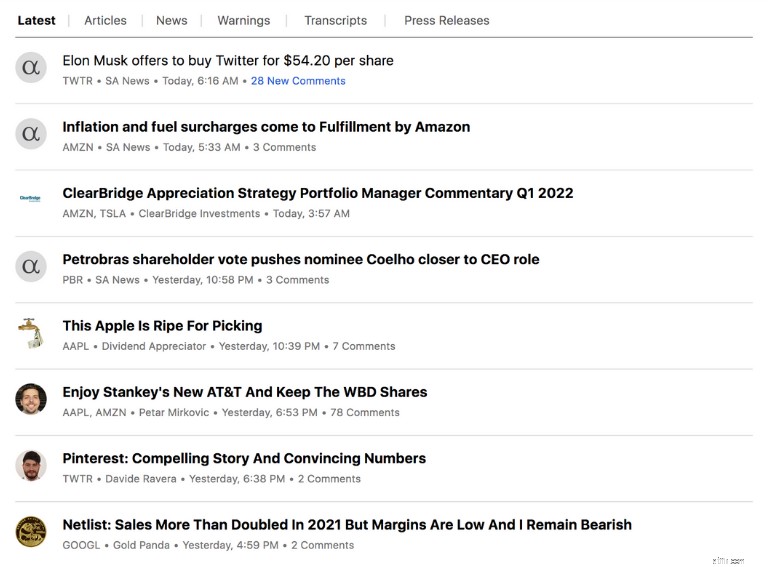
Finally, one of the other notable features of your Mock Portfolio is the custom alert and notification button.
When you click on “Manage Alerts” you can customize your alerts based on:
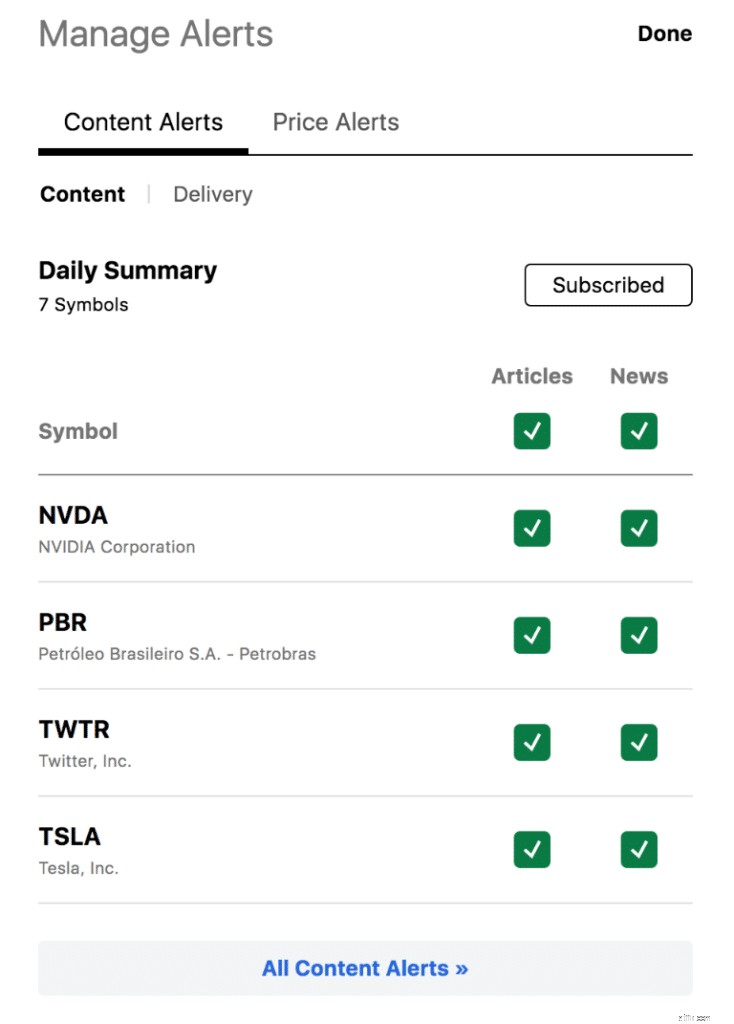
So, if there is an update on a stock like Twitter for example, you’ll receive real-life notifications to your email or phone – depending on the delivery method that you select.
You can also manage your price alerts, which I will review in a separate section here.
If you’ve already created your mock portfolio through Seeking Alpha (or even if you’ve already connected your outside brokerage account with Seeking Alpha), you can set custom price alerts.
For example, if you own shares of Twitter and the current price Quant Rating is 2.99, which is nearing a sell territory, then you may want to filter for other stocks that might be deemed a “Strong Buy.”
Here’s how (this is assuming you’ve already set up your own portfolio in Seeking Alpha. If not, then please reference the previous feature):
First, access your portfolio and click on “Manage Alerts.”
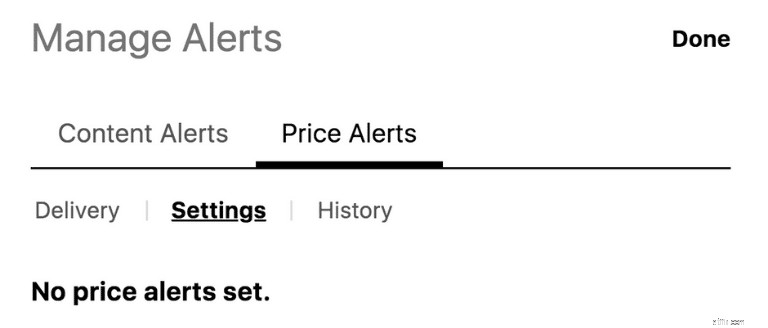
Then, click on “Price Alerts” and then on “Settings.”
From there, you’ll want to click on “All Price Alerts,” which you’ll find at the bottom of the dialogue box.
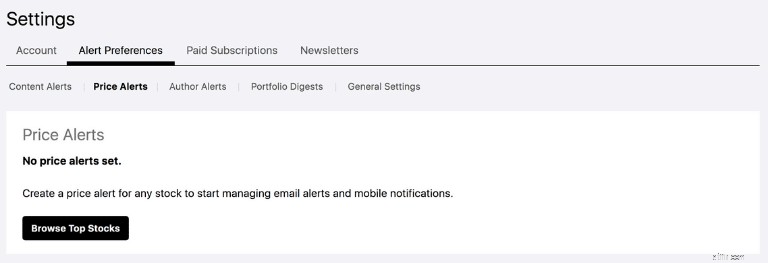
From there, click on the “Browse Top Stocks” button.
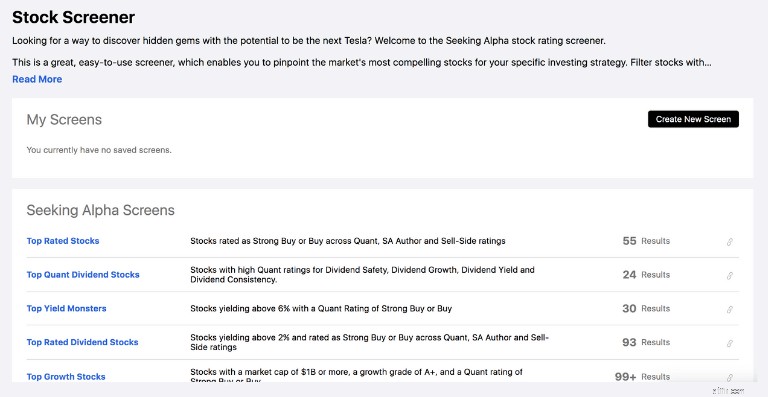
You can either continue using the Seeking Alpha Screens (and there are many) or you can create your own, custom screen.
If you create your own custom screen, you’ll be brought to a window like the one below:
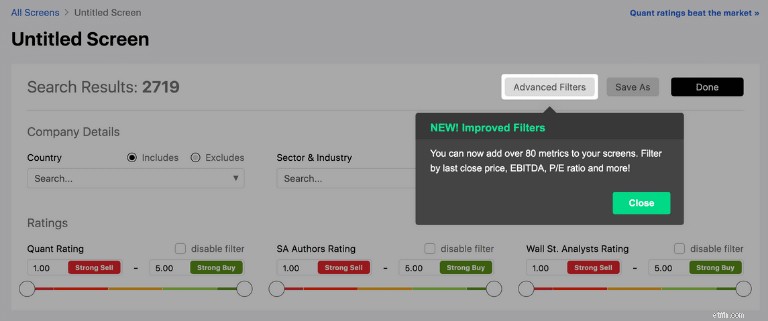
You can customize your stock screener by adding up to 80 different filters.
For example, if you want to screen for all stocks that are assigned a 4.00 out of 5.00 rating for the Quant, SA Authors, and Wall St. Analysts, this is the place to do so.
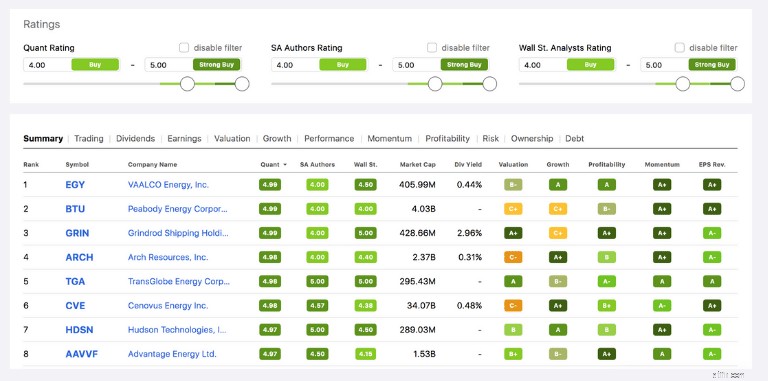
Take some time to experiment with the screening tool, because there is just so much information.
However, if you’re ever wondering why or how to filter for the best stocks for your portfolio (or your child’s portfolio), this is probably the tool you’ll want to use.
If you’re an investor who really enjoys digging deep into the financials for each company before trading its stock, you’ll be happy to know that the Premium tier also comes with downloadable financial statements .
In fact, you can access up to 10 years worth of financial statements to download, review, and analyze.
Just search your favorite company and click on the “Financials” tab.
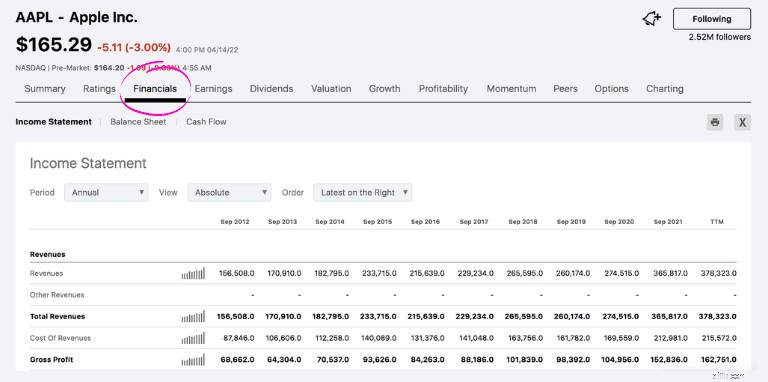
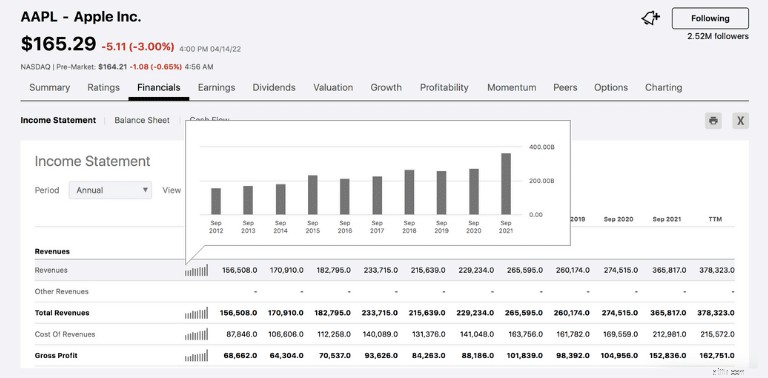
From there, you can either review the numbers or for a more visual approach, just hover over the line graph for each data set:
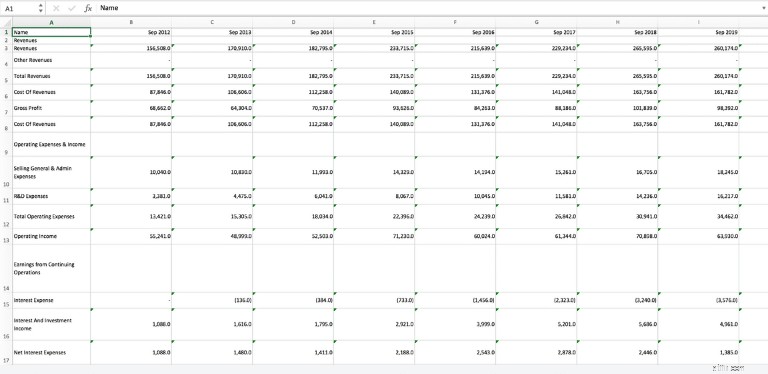
If you want to review the numbers in even more depth, you can click on the print icon or the “X” icon at the top, right of your screen to either print to PDF or download via Excel.
So depending on how in-depth you want to go, Seeking Alpha really gives you a lot of options to analyze your stocks.
Ever wonder how your current stocks compare to other stocks in the marketplace?
Take a look at the Stock Performance Comparison Tool – which is one of my favorite tools.
Just search your favorite stock and then click on the “Charting” tab.
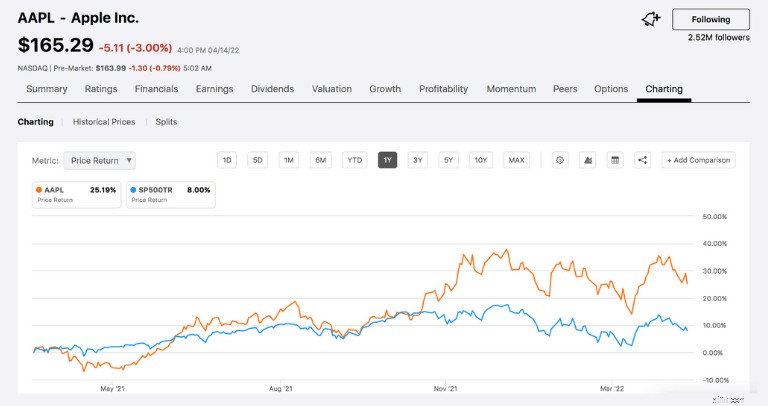
The default comparison is your stock (in this case, Apple) and the S&P 500.
However, if you want to know how apple is doing compared to another individual stock in the tech or a similar sector (like Tesla), then just click on the “+ Add Comparison” button and add your favorite stock:
Now take a look at the comparison of Apple stock versus Tesla stock over the past 3 years:
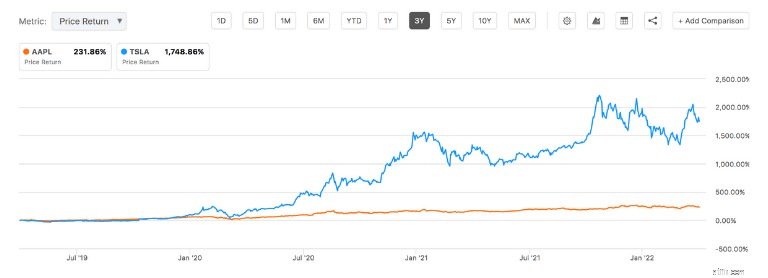
While this stock performance comparison chart shouldn’t be the only tool you should use to determine whether a stock is worth a purchase, it can certainly be a helpful guide.
Lastly – but certainly not least – another cool feature with the Premium Tier is that you can link your outside investment accounts to your Seeking Alpha account.
Remember that you’ll receive access to Seeking Alpha’s quant comparison tool, the Wall St. Analyst ratings, and the SA Author rankings – along with customizing real-life alerts for each of the stocks you hold.
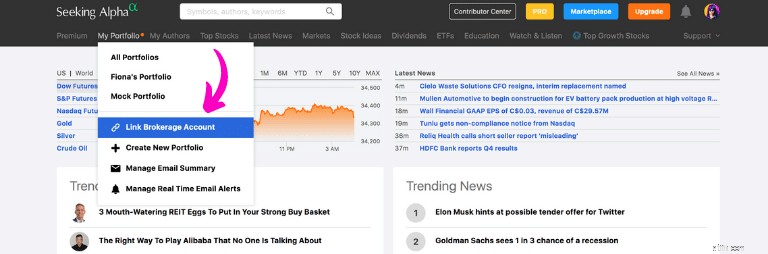
To start linking your outside accounts, just navigate to your main menu, hover over “My Portfolio” and then click on “Link Brokerage Account.”
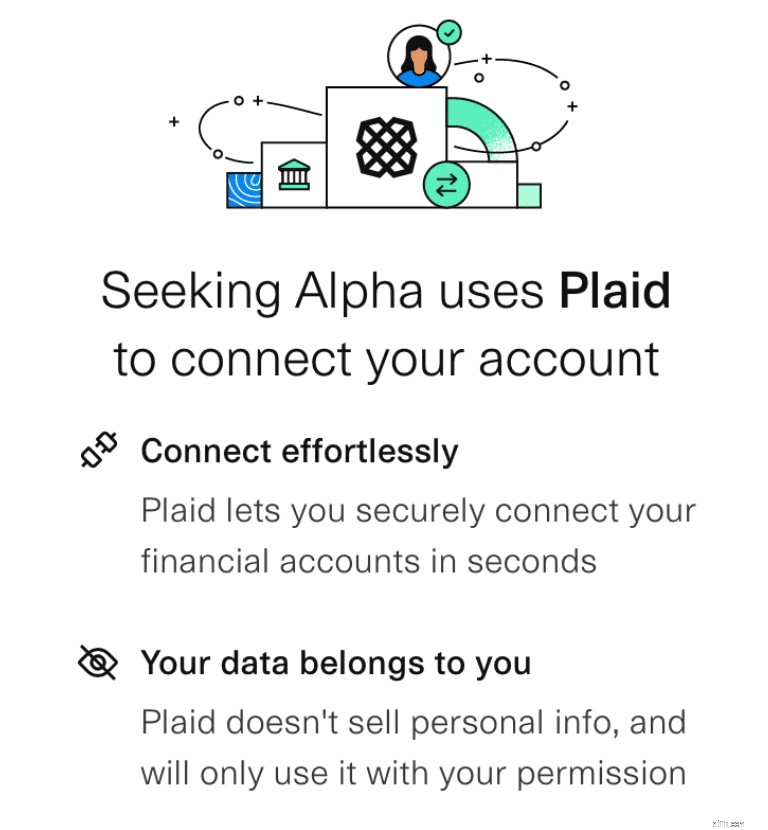
Any outside brokerage accounts that you link will be connected using the secured encryption software, known as Plaid.
You can select a number of different brokers, such as:
Even if you don’t see your brokerage firm immediately, you can either search for your brokerage firm or sometimes even input the information manually.
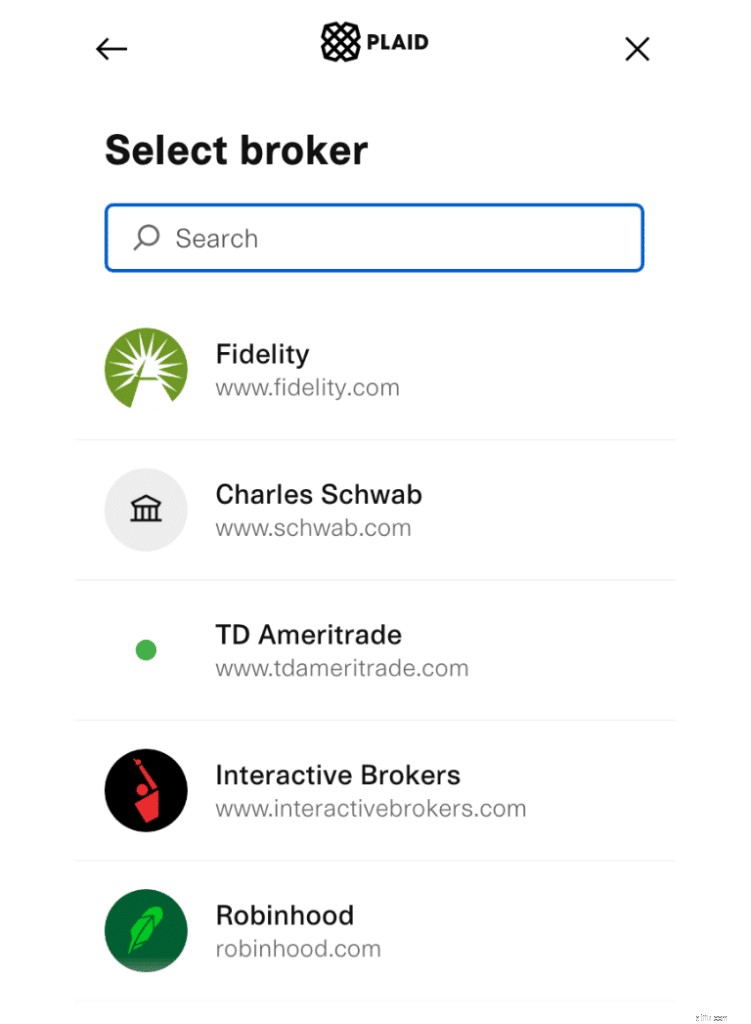
Once you’ve established a link to your brokerage account, you can do the following:
Keep in mind that Seeking Alpha is an informational platform only – you cannot place investment trades on Seeking Alpha.
So to buy or sell stocks in your linked brokerage account, you’ll actually have to sign in to your own investment account.
Recommended Reading:Best Investment Apps
Seeking Alpha Premium could be right for you if you:
Being a Premium Plan member myself, my favorite part is that you can use the Premium tier for as much or as little research as you want.
For example, if you’re thinking about adding Build-A-Bear Workshop, Inc. (BBW) to your portfolio, and you want some additional advice from industry experts.
In this case, just check out the BBW stock rankings in the Ratings Summary section.
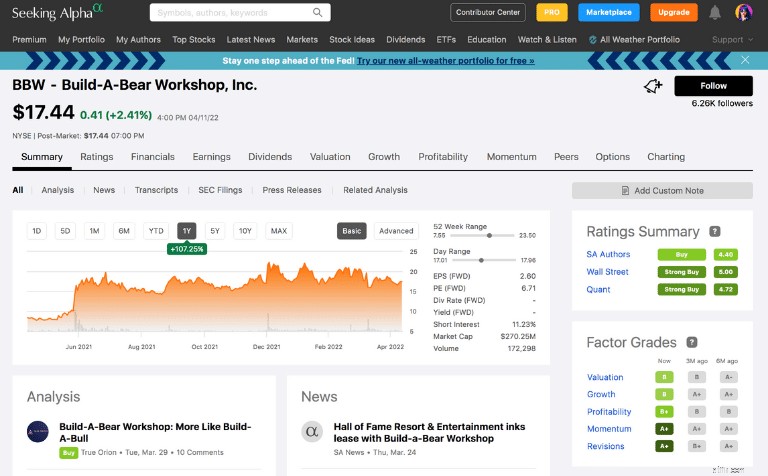
You’ll see that on 3 different instances, the BBW stock is considered a Buy to a Strong Buy opportunity:
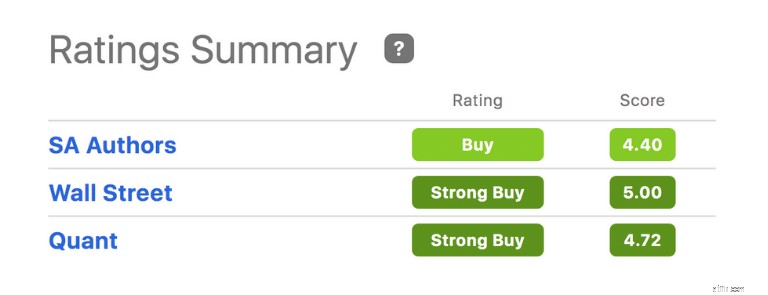
Now, if that’s all the reassurance you were looking for, you can move on and not look back.
However, if you want to drill into more depth with the Build-A-Bear Workshop, Inc. stock, Seeking Alpha lets you do as much fundamental analysis as you want.

The Bottom Line:
The Premium Plan gives intermediate investors the best of both worlds:Reassurance on which stocks to buy, hold, or sell while also going into as much analytical depth as possible.
Just like the Premium Plan, you can also start a 14-day free trial period with the Seeking Alpha Pro Plan .
If you enjoyed the Pro Plan trial period, then you can pay for the Pro Plan in 2 ways:
Monthly Plan
$299.99/month
Annual Plan
$2,400 (or $199.99/month, as advertised)
It appears that the default case for Seeking Alpha is charging the full year’s worth of premiums upfront (so $2,400 in this case).
One of the best benefits to the Pro Plan is that you receive VIP access and Editorial Concierge, customized to your needs.
Keep reading to find out more about the key features of the Pro Plan.
In this section, I’ll explain in detail some of the top Pro Plan features and how you can benefit from each (keep in mind that the Pro Plan already comes with the Premium Plan features).
Below is an overview of the additional Seeking Alpha Pro Plan features:
With the Seeking Alpha Pro Plan, your entire user experience will be ad-free.
Remember that the Limited Access version does come with ads and the Premium version offers an ad-lite user experience.
The Seeking Alpha Pro platform gives you the chance to be as specific as possible when filtering your investments.
You can filter your investments by:
If you know what you’re doing and if you know what you’re looking for, then this investment screener can be used to your advantage.
If you want the bells, the whistles, and the exclusive VIP treatment, then you should consider the Pro Plan.
The editorial team works directly with Pro level subscribers to filter out and pinpoint ideas that fit to your investing needs, style, and preferences.
If you want daily short summaries of the top 1% of the Seeking Alpha content, then your Seeking Alpha Pro level subscription will give you that VIP treatment.
As a Pro member, you’ll have Seeking Alpha’s industry experts send you a weekly list of their hand-picked top investment ideas from Seeking Alpha contributors.
Seeking Alpha Pro could be right for you if you:
Another neat feature is that you could also contribute to the Seeking Alpha community by writing an article with your research and opinion.
The Bottom Line:
The Pro Plan gives advanced investors and industry professionals an in-depth and resourceful experience when researching and analyzing stocks, funds, and ETFs.
I’ve personally reached out to Seeking Alpha’s customer service on 3 different occasions to evaluate their:
…And I must say that Seeking Alpha passed my test with flying colors.
Below is my evaluation:
Knowledge
⭐️⭐️⭐️⭐️⭐️
Friendliness
⭐️⭐️⭐️⭐️⭐️
Experience
⭐️⭐️⭐️⭐️⭐️
I’m drawing from my own personal experience from speaking with 3 different Seeking Alpha personal representatives.
The good news is that you can contact Seeking Alpha in 4 main ways:
contactus@seekingalpha.com
Social Media
– YouTube
Navigation Bar
Support Button
Phone Call
347-509-6837
Phone Support Center Hours
Monday to Friday 8am to 4pm EST (holiday hours may apply)
It’s reassuring for me to see the different ways you can contact Seeking Alpha.
While Seeking Alpha is not accredited with the BBB, I was still shocked to see the “F” rating on the BBB website:
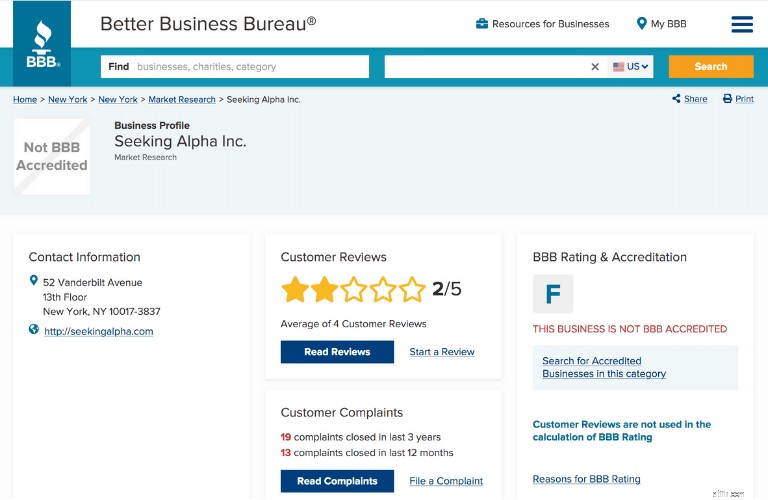
I even double-checked to see if I had the right Seeking Alpha company pulled up on my screen – and I did.
The common complaints appear to only apply to subscribers looking for the “free trial” period:
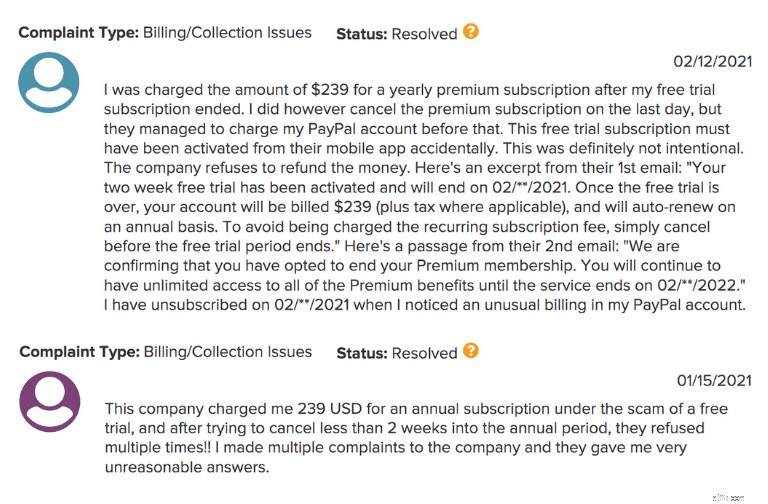
Based on these complaints (which are somewhat recent), it looks like many customers who signed up with the free trial period were charged after the period ended.
Based on this information, if I were signing up to the free trial period, I would probably triple check to read all of the fine print and possibly even cancel before the trial period is over (assuming you’re not happy with the platform).
Now that you have an idea of what people are unhappy about, let’s take a closer look at the ratings on TrustPilot, which is another customer review website.
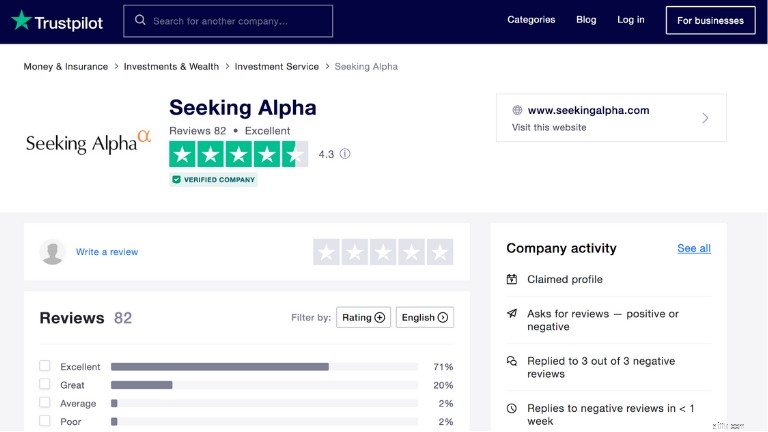
Now, this Trust Pilot customer review is more in line with what I was expecting to see.
On TrustPilot, a solid 93% of respondents rated Seeking Alpha average to excellent.
Some reviews are below:
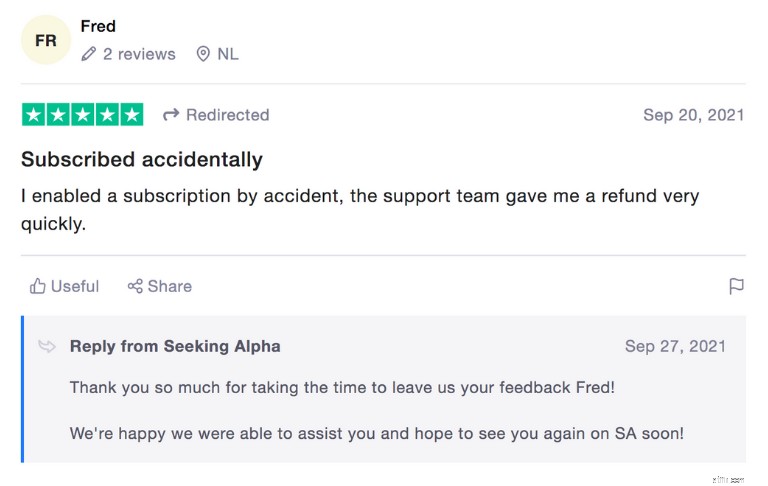
This review virtually contradicts the reviews from the BBB, which said Seeking Alpha did not offer a refund.
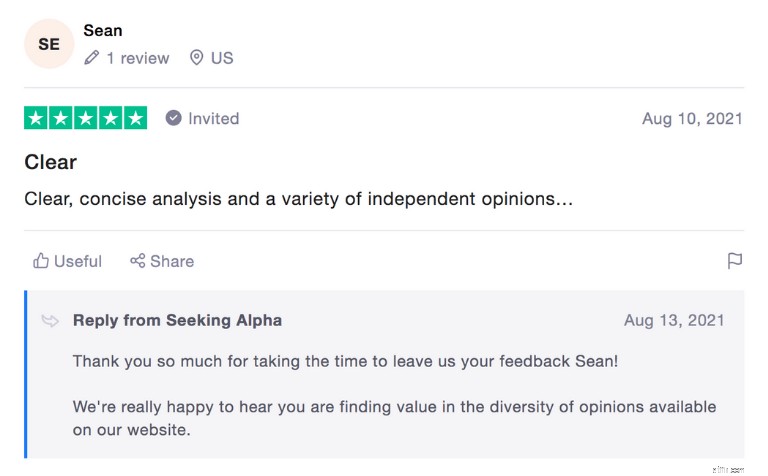
Above is another positive review about the accuracy and impartiality (no bias) of the authors that provide information on Seeking Alpha.
Of the 2 negative reviews that were posted from the 82 total reviews, the complaints were the following:
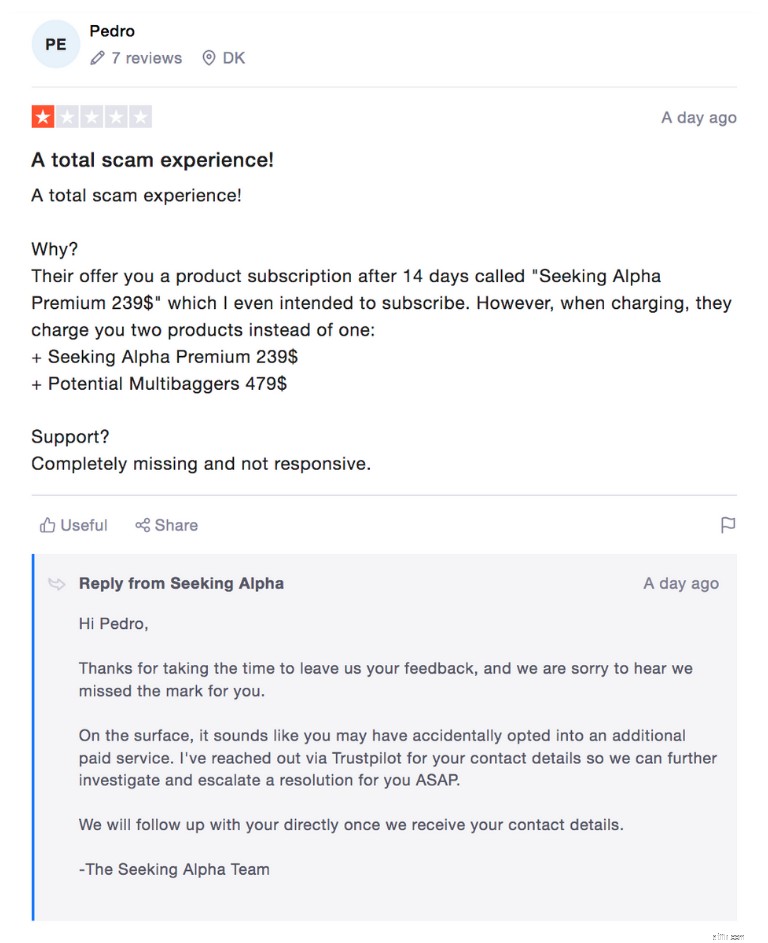
Take a look at the response time of when the negative review was posted (1 day ago) versus the reply from Seeking Alpha (also 1 day ago).
I thought that was impressive.
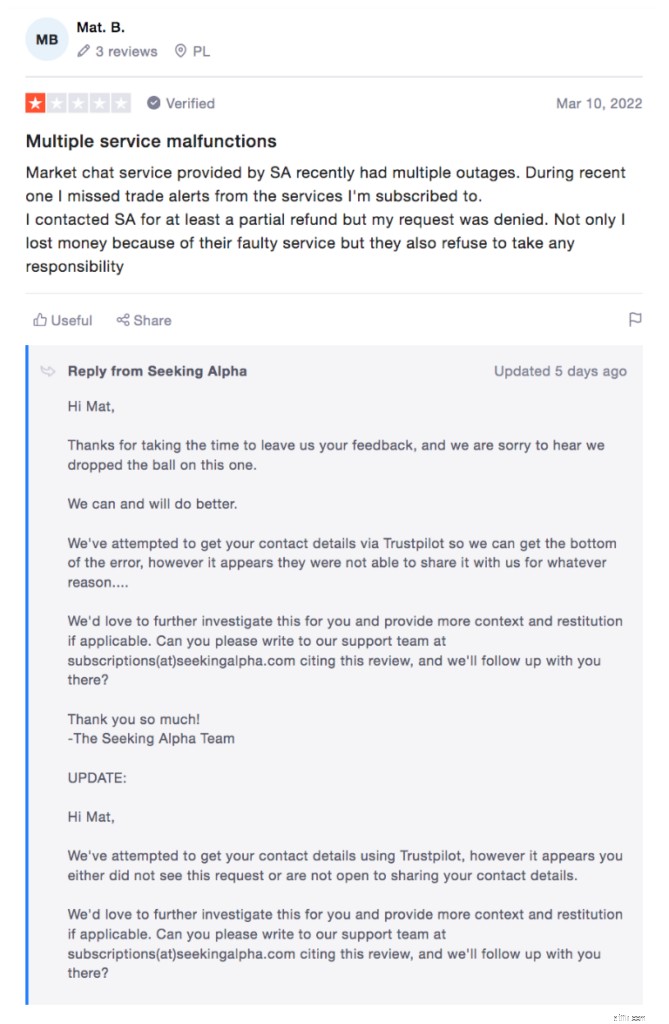
As you can see, there will always be good and bad reviews, and you’ll have to take the reviews with a grain of salt (seriously).
Personally, I like checking back into the customer service review platforms every few months, just to read updates.
The Bottom Line:
Most of the “Bad” Seeking Alpha reviews involve the free subscription service. According to the complaints, immediately after the free trial period ends, the consumer credit card will be charged the annual amount for a paid subscription (likely the Premium subscription).
Now it might sound daunting that Seeking Alpha offers works from 7,000 active monthly authors.
You might even be concerned about the quality of the information if there are so many contributors.
Their team has a pretty quick article turnaround time as well, which typically ranges between 1 hour to a few business days.
Do you have industry expertise and want to contribute?
Below are 9 of the most important requirements to pass the rigorous Seeking Alpha editorial review process:
Market-Oriented
Write about stocks, sectors, ETFs, or other actionable themes for US-based investors
High-Quality
Articles must be convincing, well-presented, and actionable
Fundamental Analysis
Articles must address factors such as a company’s competitors, products, management, corporate strategy, etc.
Originality
Always bring a new perspective to a topic
Compelling Title
Your title shouldn’t overpromise and underdeliver
Market Cap
Articles mentioning stocks trading at less than $1 or companies with market caps less than $100 million will receive extra scrutiny
Clean
You must proofread your article before submission
No Promotional Content
No promotional content in articles
Human Factor
Editors work closely with contributors and maintain a constructive dialogue
As you can see, there are a lot of requirements that go into the making and the publication of a Seeking Alpha article, so chances are that you’ll get the high quality you want.
And with each month, over 10,000 articles are published on Seeking Alpha!
Another neat thing is that you can view a contributor’s past track record of stock predictions.
Another trick to finding information from top ranked authors is just simply clicking on the “Top Authors” button.
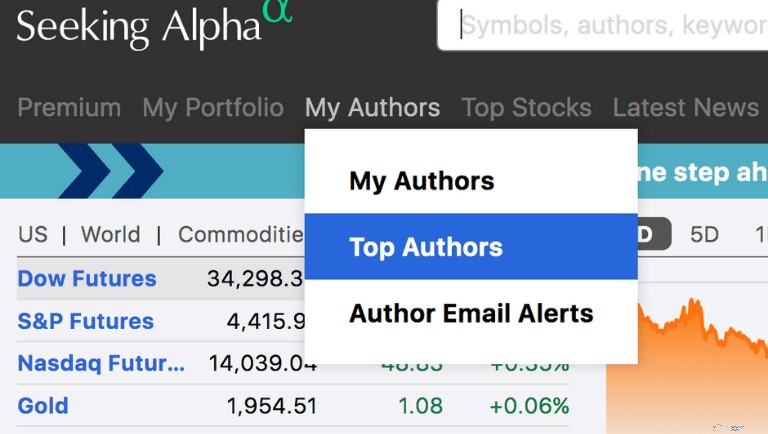
Once in the Top Authors section, you’ll receive a long list of author suggestions, based on their specialty (such as value investing, growth investing, oil &gas investing, etc.).
Another reason why I’m a big fan of Seeking Alpha is because of the abundance of educational resources this platform offers its users:
Investment Videos
Access top investment news videos by clicking on the tab “Watch &Listen” and then clicking on “Videos”
Investment Podcasts
Learn more about the latest investment news by accessing 8 Seeking Alpha podcasts. Click on “Watch &Listen” and then on “Podcasts”
Financial Planning Education
Seeking Alpha knows that investing is just a part of the financial planning process. When you click on the “Education” tab, you’ll gain access to a variety of different financial planning topics, ranging from cryptocurrency to 401(k) management
Seeking Alpha Knowledge Base
Type any question into the search box and you’ll probably find an answer. The Knowledge Base can be accessed by clicking on the “Support” icon and then “Knowledge Base”
Feedback Forum
If you ever have trouble with the Seeking Alpha desktop website or the mobile app, this is the place to share your concerns, feedback, and interact with other users. Access the forum by clicking on the “Support” icon and then “Feedback Forum”
As you can see, Seeking Alpha does not keep you in the dark – when it comes to investing or financial planning-related matters.
One of my favorite learning sections on Seeking Alpha is the “Education” section, where Seeking Alpha users can learn about more than just investing.
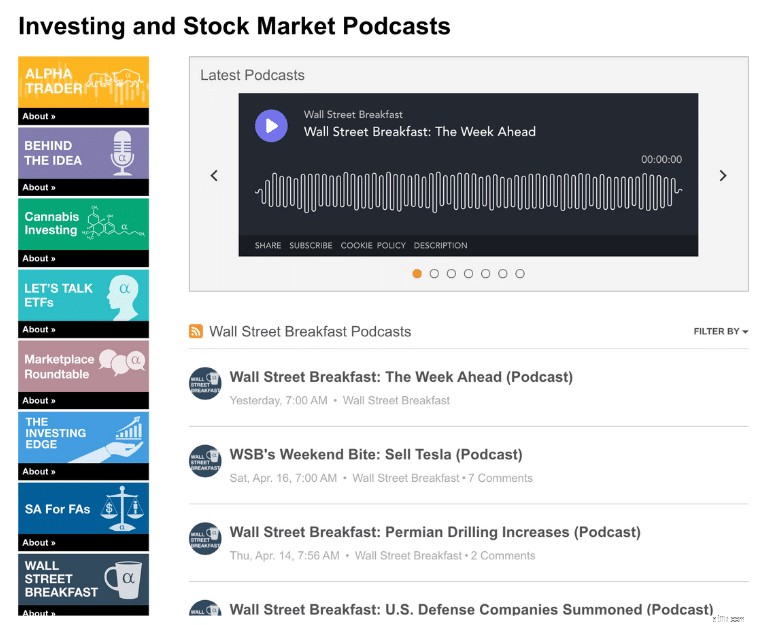
Under the education tab, you access articles about other topics that may not be covered in-depth by the Seeking Alpha Authors.
Some of these topics include:
I’m also a fan of the “Watch &Listen” section, which offers Seeking Alpha readers access to investment podcasts and videos.
If I’m ever stuck in traffic, I listen to one of the podcasts (I like the Wall Street Breakfast podcast).
The good news is that Seeking Alpha offers so much variety from which to choose – you’ll never be left without ideas.
Ready to open an account with Seeking Alpha?
Believe it or not, it’s actually a very fast and simple process.
First, head to the Seeking Alpha website and click “Subscribe.”
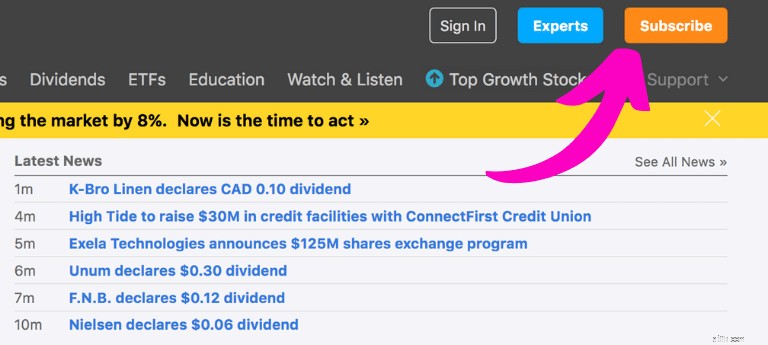
After you click the subscribe button, you can choose to either start a free trial or register immediately with one of the 3 plans (Limited Access, Premium, or Pro).
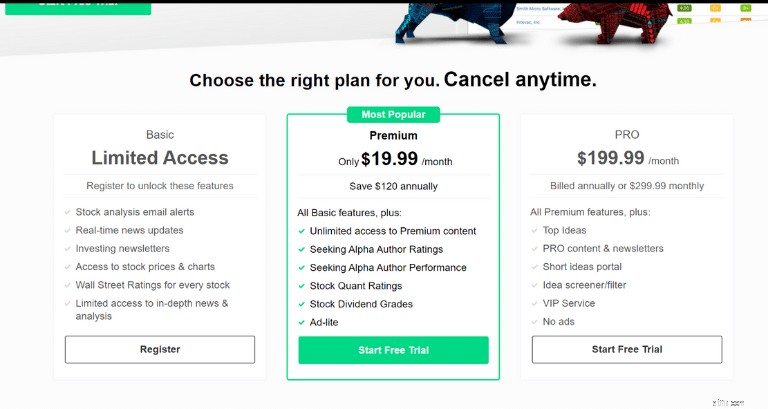
Now, if you’re ready to register and pay for your subscription, then select your plan preference.
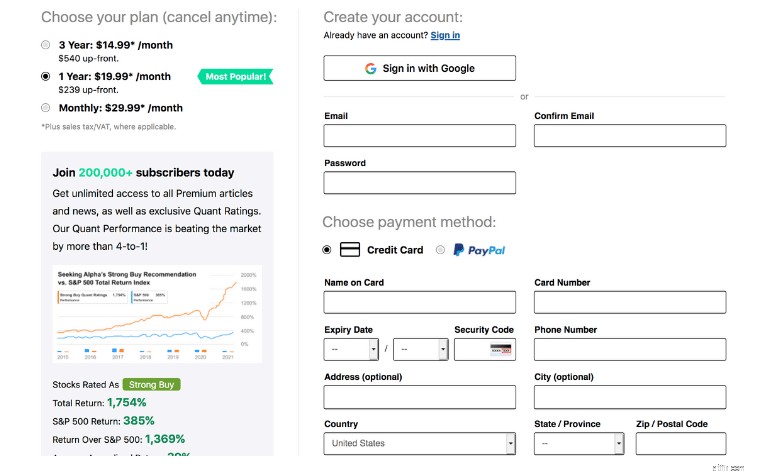
Payment methods are either via credit card or PayPal.
In my opinion, if you’re an investor who really wants to understand more about your investment holdings, then Seeking Alpha is probably a great platform for you.
Yes, Seeking Alpha is worth the cost if you do your own investment research and want to interact with experienced investors. For $19.99 per month, you get access to exclusive content from over 7,000 experienced investment authors, custom stock performance charts, and portfolio monitoring tools.
If you sign up to the Premium Platform, you can access the Seeking Alpha Quant Ratings, which have outperformed the market since 2010.
The Quant Ratings marked as “Very Bullish” for stocks were up 1,754% versus the market’s 385% gain.
On the other hand, the stocks that were rated as “Very Bearish” by Seeking Alpha really did underperform, being up by only 156% versus the market’s overall 385%.
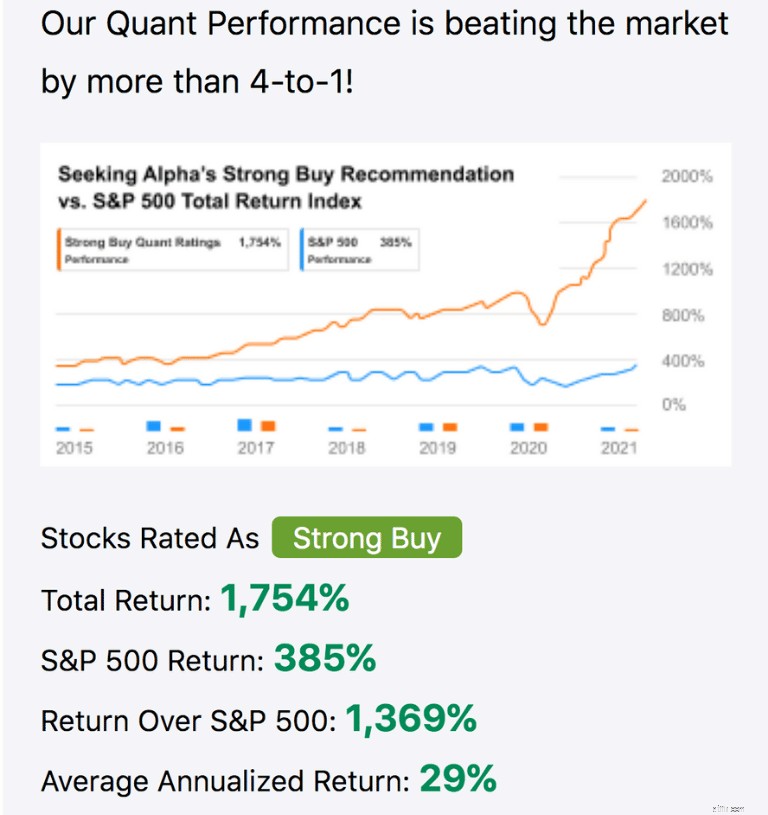
While I’m not a fan of day trading and stock picking, if I am looking to buy or sell a stock or fund in my portfolio, Seeing Alpha would be my first stop before hitting that “trade” button.
Seeking Alpha might not be for everyone.
If you’re an active investor and just don’t like the investment research platform, then you may want to check out platforms like the Motley Fool’s Stock Advisor.
While the cost is certainly lower for new members ($99 per year), you also don’t get access to the customization, the tools, and the crowdsourcing that Seeking Alpha uses.
You can always sign up to the free version of each platform first before committing financially.
Based on Seeking Alpha’s track record, yes, Seeking Alpha is reliable. As an example, Seeking Alpha’s “Very Bullish” stock evaluation ratings have outperformed the market since 2010, up 1,754% versus the market’s 385% gain.
Seeking Alpha’s Premium membership is absolutely worth the cost if you want to conduct your own investment research and interact with experienced investors.
You pay $19.99 per month in exchange for exclusive access to content from over 7,000 experienced investment authors, custom stock performance charts, and portfolio monitoring tools.
Yes, Seeking Alpha’s Premium membership is worth the cost if you do your own investment research and want to interact with experienced investors. For $19.99 per month, you get access to exclusive from over 7,000 experienced investment authors, custom stock performance charts, and portfolio monitoring tools.
You can still use Seeking Alpha as a free user under the Limited Access plan. However, you can unlock only 5 articles per month before being prompted to sign-up as a paying Premium member. The Premium membership costs $19.99 per month as of early 2022.
Seeking Alpha is probably one of the best tools for day traders, active investors, and even swing traders. If you want to do your own investment research and learn from industry experts, then Seeking Alpha really is a good fit.
If you aren’t a day trader or someone who enjoys researching and picking stocks for their portfolio, then Seeking Alpha is probably not for you. For example, passive investors who use mutual funds, index funds, or even ETFs probably won’t find too much value from the Seeking Alpha platform.
Seeking Alpha was founded by David Jackson in 2004. Jackson is a graduate of Oxford University (undergraduate) and The London School of Economics (graduate).
He worked as a technology research analyst at Morgan Stanley, where Jackson saw a problem (the conflict of interest stemming from investment banks publishing information about the products they sell) and developed a solution with the unbiased Seeking Alpha platform.
Seeking Alpha is likely one of the best platforms if you want to:
In my opinion, the biggest benefit you get from Seeking Alpha is the unbiased research.
For example, you won’t find research articles about funds written by the very company that sells the same fund.
There is no conflict of interest with Seeking Alpha, just pure authenticity and knowledge shared by industry experts.
You can access Seeking Alpha through 3 plans:
If you’re really planning to use Seeking Alpha as a way to evaluate your portfolio, research stocks, and learn (and interact) with investment industry experts, then you’ll probably want to sign up with the Premium Plan .
The Premium Plan offers the following features:
The list really does keep going, but you get my point.
The Premium Seeking Alpha plan offers a lot of benefits, and that’s the plan that I’m using myself right now.
The Bottom Line:
What I really like about Seeking Alpha is that this investment research platform truly is a democratized platform that shares quality ideas and insights from industry experts.
Now I’d like to hear from you:
What are your thoughts on Seeking Alpha?
Would you consider opening an account with this platform?
Let me know in the comments section below.